
Description
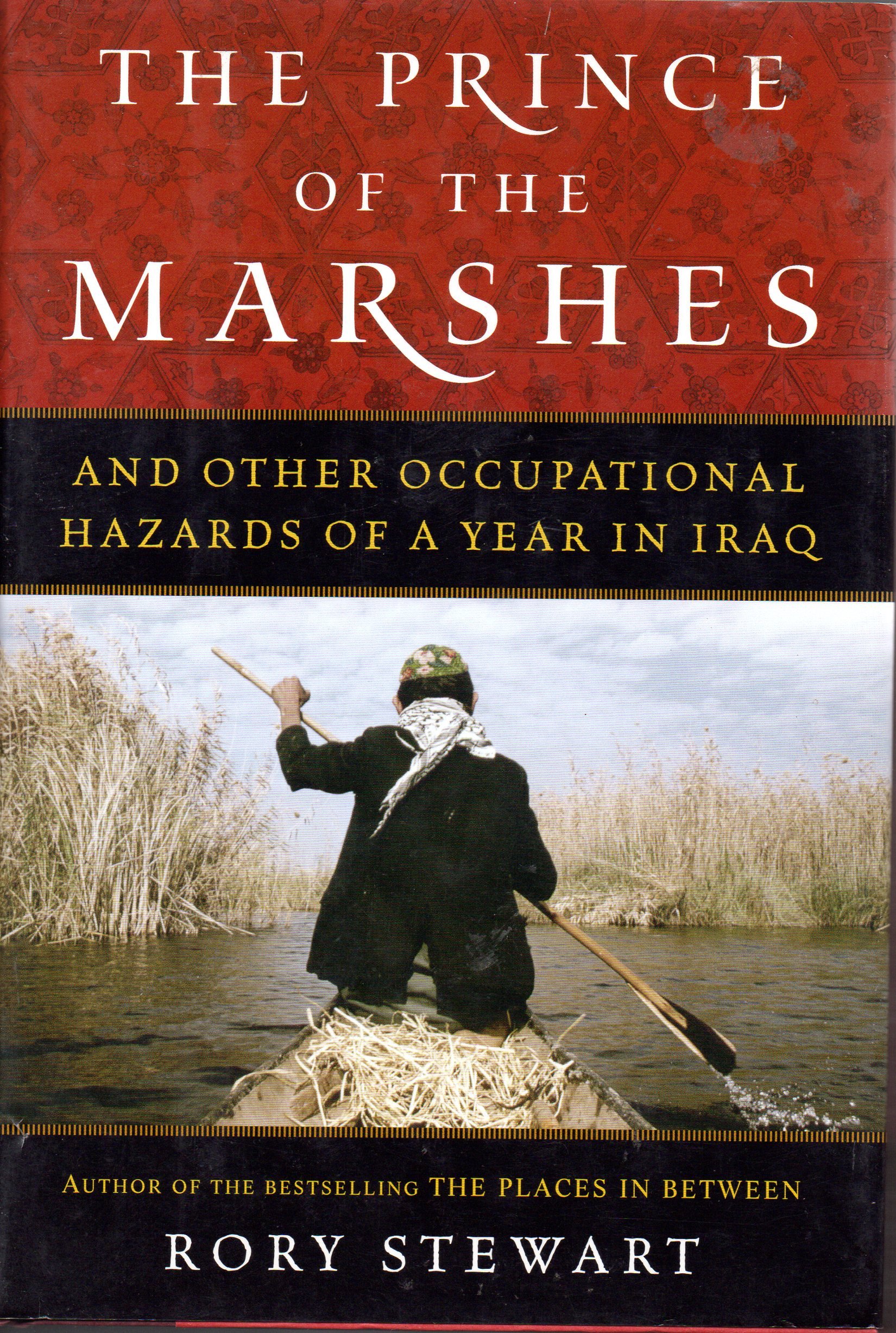
In August 2003, at the age of thirty, Rory Stewart took a taxi from Jordan to Baghdad. A Farsi-speaking British diplomat who had recently completed an epic walk from Turkey to Bangladesh, he was soon appointed deputy governor of Amarah and then Nasiriyah, provinces in the remote, impoverished marsh regions of southern Iraq. He spent the next eleven months negotiating hostage releases, holding elections, and splicing together some semblance of an infrastructure for a population of millions teetering on the brink of civil war. The Prince of the Marshes tells the story of Stewart's year. As a participant he takes us inside the occupation and beyond the Green Zone, introducing us to a colorful cast of Iraqis and revealing the complexity and fragility of a society we struggle to understand. By turns funny and harrowing, moving and incisive, it amounts to a unique portrait of heroism and the tragedy that intervention inevitably courts in the modern age. Adult/High School–At the age of 30, the author, a former soldier and diplomat, speaker of Farsi but not of Arabic, was appointed as one of the leading Coalition civilian officials in Maysan, acting as deputy commander first there and then in Nasiriyah during the final nine months of the Coalition's authority in Iraq. Stewart's tale, even more than his complex identity, gives insight into the new and unexpected situation into which the United States and its allies were thrust after toppling Saddam Hussein. His story is one of relations: with his civilian and military counterparts from different nations in the provinces; with the leaders of the Coalition in Baghdad; and with the Iraqis with whom he was trying to build a new order and to whom he was to leave the provinces' leadership in but a few months. He recounts all this in fascinating and stimulating detail. The knowledge and the ignorance, the past history and the present reality, and the effects that they have had and are having become better clarified for Americans at home from reading this book. –Ted Westervelt, Library of Congress, Washington, DC Copyright © Reed Business Information, a division of Reed Elsevier Inc. All rights reserved. In 2003, Stewart, a former British diplomat, joined the Coalition Provisional Authority in Iraq and was posted to the southern province of Maysan, where he found himself the de-facto governor of a restive populace whose allegiances were split among fifty-four political parties, twenty major tribes, and numerous militias. Stewart's account of his attempts to placate the various local figures who continually threaten to kill each other, or him, is both shrewd and self-deprecating. Money arrives from Baghdad in vacuum-packed million-dollar bricks, but there is no budget for such culturally crucial purchases as an ox for the funeral of an assassinated police chief. Stewart's exasperation with the cultural ignorance of C.P.A. directives is as manifest as his affectionate regard for the rhythms and customs of Arab life, a quality that often recalls an earlier generation of British travel writer. Copyright © 2006 The New Yorker - click here to subscribe. Stewart is a Scotsman, journalist, and former fellow at the Carr Center for Human Rights Policy at Harvard's John F. Kennedy School of Government. In 2003, having recently completed a walking tour of western and central Asia, Stewart was appointed deputy governor of two provinces in the marsh regions of southern Iraq. The marsh Arabs suffered greatly under Saddam Hussein; their livelihood was destroyed when the marshes were drained. As Shia Muslims, they were subject to periodic persecutions by Hussein's henchmen. Stewart's prior experiences gave him insight into rural Islamic culture, and he was dedicated to a ground-up reconstruction of the region. However, as his account of his 11 months in Iraq illustrate, Stewart was constantly frustrated by the ignorance, incompetence, and bureaucratic inertia of occupation authorities. Still, Stewart was able to forge strong bonds with individual Arabs, and his description of his personal relations form the core of an interesting look at a region of Iraq rarely covered in the mass media. Jay Freeman Copyright © American Library Association. All rights reserved Rory Stewart has written for the New York Times Magazine, Granta, and the London Review of Books, and is the author of The Places in Between. A former fellow at the Carr Center for Human Rights Policy at Harvard's John F. Kennedy School of Government, he was awarded the Order of the British Empire by the British government for services in Iraq. He lives in Scotland. In June 2003, a little more than two months after the fall of Saddam Hussein, I traveled to Majar al-Kabir, a small farming town in southeastern Iraq, after an angry mob of Shiite Muslims had set upon the local police station and killed six British soldiers. To cover the story, I interviewed a few dozen people who lived nearby, talked to British military off
More Information
| Gtin | 09780151012350 |
| Age_group | ADULT |
| Condition | NEW |
| Gender | UNISEX |
| Product_category | Gl_book |
| Google_product_category | Media > Books |
| Product_type | Books > Subjects > Biographies & Memoirs > Historical > Middle East |