
Description
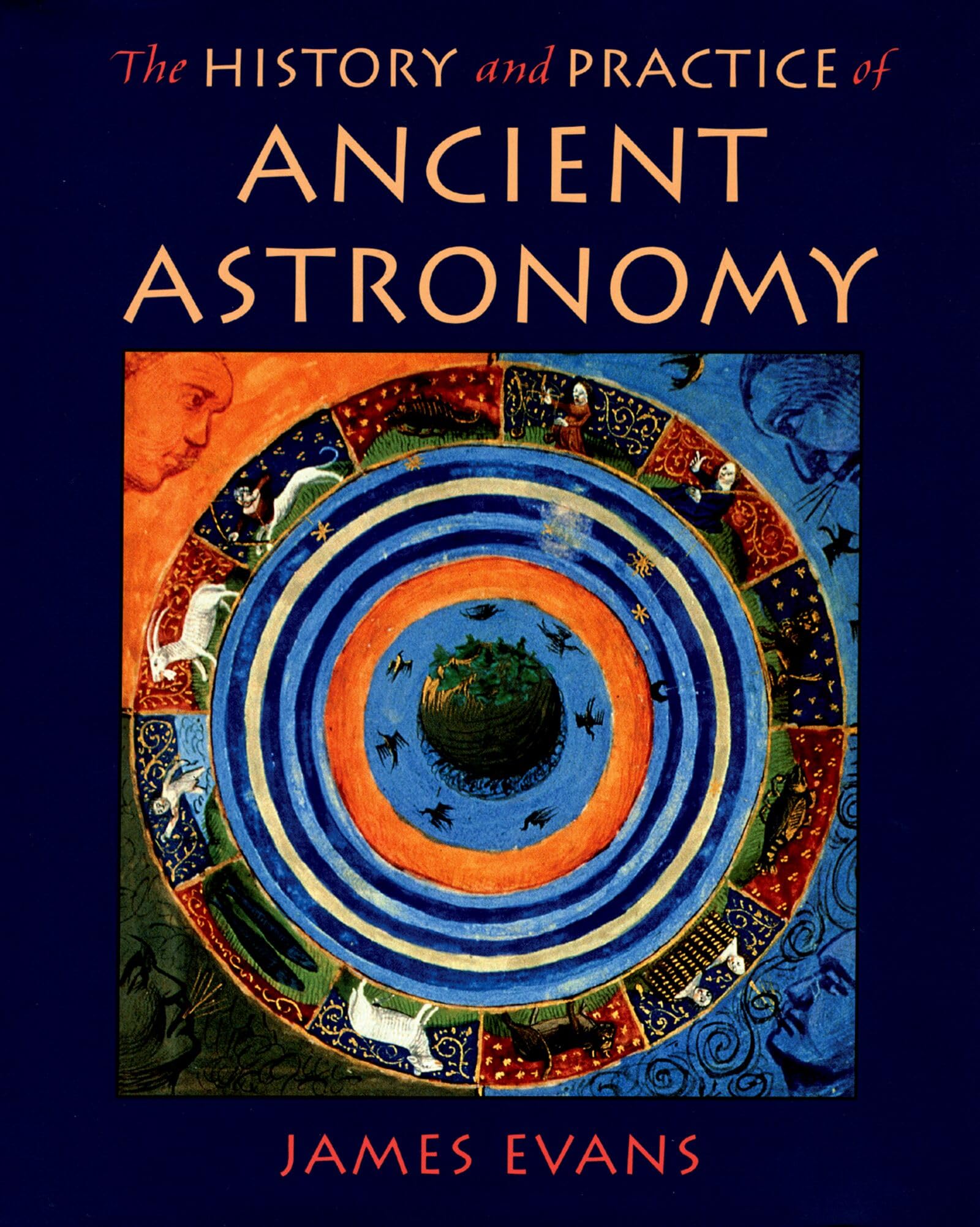
The History and Practice of Ancient Astronomy combines new scholarship with hands-on science to bring readers into direct contact with the work of ancient astronomers. While tracing ideas from ancient Babylon to sixteenth-century Europe, the book places its greatest emphasis on the Greek period, when astronomers developed the geometric and philosophical ideas that have determined the subsequent character of Western astronomy. The author approaches this history through the concrete details of ancient astronomical practice. Carefully organized and generously illustrated, the book can teach readers how to do real astronomy using the methods of ancient astronomers. For example, readers will learn to predict the next retrograde motion of Jupiter using either the arithmetical methods of the Babylonians or the geometric methods of Ptolemy. They will learn how to use an astrolabe and how to design sundials using Greek and Roman techniques. The book also contains supplementary exercises and patterns for making some working astronomical instruments, including an astrolabe and an equatorium. More than a presentation of astronomical methods, the book provides a critical look at the evidence used to reconstruct ancient astronomy. It includes extensive excerpts from ancient texts, meticulous documentation, and lively discussions of the role of astronomy in the various cultures. Accessible to a wide audience, this book will appeal to anyone interested in how our understanding of our place in the universe has changed and developed, from ancient times through the Renaissance. In Ptolemy's The Almagest , the earth is placed at the center of the universe and the planets move in crystal spheres against a backdrop of fixed stars. While these ideas have been swept away since the scientific revolution, Ptolemy's influence on astronomy was profound and long--we'll be dealing with the Y3K problem before Copernicus's time of influence catches up. James Evans, historian and astronomer at the University of Puget Sound, believes that "staying close to the practice of astronomy means explaining a subject in enough detail for the reader to understand what the ancient astronomers actually did ." As this unique book teaches you to do astronomy the old-fashioned way, you gain a profoundly deeper understanding of what the Greeks and their successors thought and did. "There is all the difference in the world between knowing about and knowing how to do ," says Evans. The History and Practice of Ancient Astronomy is truly hands-on history, and deserves to be widely imitated. --Mary Ellen Curtin " The History and Practice of Ancient Astronomy is one of the most exciting and original books ever written on ancient, as well as medieval and Renaissance, astronomy, indeed, on the history of science. Here, for the first time, the reader can learn not only about ancient astronomy, but how to do ancient astronomy. The breadth of coverage is encyclopedic, from the Babylonians and Greeks, Ptolemy in particular, through Arabic astonomers of the middle ages, to Copernicus and Kepler. James Evans writes with an understanding and clarity that guides the reader through two thousand years of astronomy so that it is, as it were, brought back to life and can be understood as thoroughly as modern science. This is an ideal way to write the history of science and to learn the history of science." --N.M. Swerdlow, Department of Astronomy and Astrophysics, University of Chicago "Jim Evans combines a keen historical sense with a tinkerer's ingenuity and a gifted teacher's enthusiasm. His perceptive physical insights illuminate the intricacies of the early planetary theories. What I find particularly marvelous is the accuracy of his presentation (something remarkably hard to come by)." --Owen Gingerich, Professor of Astronomy and History of Science, Harvard-Smithsonian Center for Astrophysics "It is a beautifully designed book, comprising 475 8-by-11 inch pages with clearly drawn illustrations . . . Based on twenty years of teaching his students not just ideas, but the actual nitty-gritty of historic models, Jim has masterfully explicated a tremendous range of historical astronomy, stretching from the Babylonians to Kepler. The focus is on the Greeks and Ptolemy, but much else is also covered. In each case he explains the astronomy in a modern sense and then carefully shows what the ancient astronomers actually did . Relying on tables and graphical methods more than geometry and trigonometry, he gives examples and provides exercises that allow the reader to enter worlds of the past. In addition, patterns and instructions are given so that one can construct and use cardboard versions of an astrolabe and of Ptolemaic slats. . . . Rarely does one see such a combination of usefulness, elegance, accuracy, and scholarship."-- HAD News "There are many 'history of astronomy' books, but none that I've seen attempt to do what James Evans does--which is to show how
More Information
| Gtin | 09780195095395 |
| Mpn | 9780195095395 |
| Age_group | ADULT |
| Condition | NEW |
| Gender | UNISEX |
| Product_category | Gl_book |
| Google_product_category | Media > Books |
| Product_type | Books > Subjects > Science & Math > Astronomy & Space Science > Astronomy |