
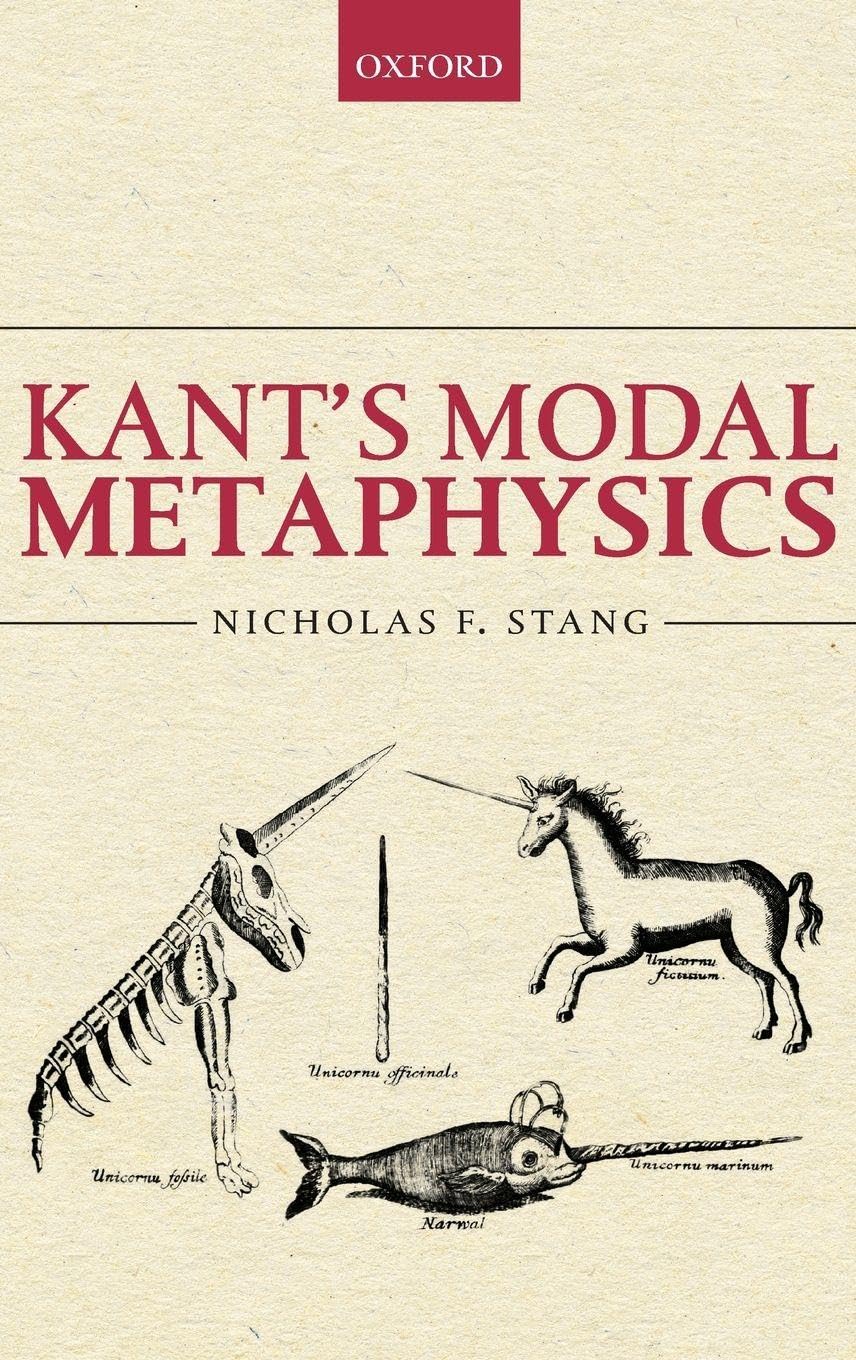
Description
What is possible and why? What is the difference between the merely possible and the actual? In Kant's Modal Metaphysics Nicholas Stang examines Kant's lifelong engagement with these questions and their role in his philosophical development. This is the first book to trace Kant's theory of possibility all the way from the so-called 'pre-Critical' writings of the 1750s and 1760s to the Critical system of philosophy inaugurated by the Critique of Pure Reason in 1781. Stang argues that the key to understanding both the change and the continuity between Kant's pre Critical and Critical theory of possibility is his transformation of the 'ontological' question about possibility--what is it for a being to be possible?--into a question in 'transcendental philosophy'--what is it to represent an object as possible? The first half of Kant's Modal Metaphysics explores Kant's pre-Critical theory of possibility, including his answer to the ontological question about the nature of possibility, his rejection of the traditional ontological argument for the existence of God, and his own argument that God must exist to ground all possibility. The second half examines why Kant reoriented his theory of possibility around the transcendental question, what this question means, and how Kant answered it in the Critical philosophy. Stang shows that, despite this reorientation, Kant's basic scheme for thinking about possibility remains constant from the pre-Critical period through the Critical system. What had been an ontological theory of possible being is reinterpreted, in the Critical system, as a theory of how we must represent possible objects, given the nature of our intellect. "Nick Stang offers an extremely meticulous and original study of Immanuel Kant's theory of modality. It is the first book dedicated solely to Kantian modality in the Anglophone Kant literature, crowning the recent surge of articles on the subject, while also setting up a fertile ground for further discussion. The book's appeal is not limited to Kant readers. Considering its historical focus and scope, Stang's book is unusually rigorous, analytically argued, and well informed by twentieth-century modal metaphysics and logic, making it perfectly accessible to those who are interested in modality from a contemporary metaphysical point of view." -- Journal of the History of Philosophy Nicholas F. Stang, University of Toronto Nicholas F. Stang is Assistant Professor in the Department of Philosophy at University of Toronto.
More Information
| Gtin | 09780198712626 |
| Mpn | 9780198712626 |
| Age_group | ADULT |
| Condition | NEW |
| Gender | UNISEX |
| Product_category | Gl_book |
| Google_product_category | Media > Books |
| Product_type | Books > Subjects > Politics & Social Sciences > Philosophy > History & Schools Of Thought > Western > Modern |