
Description
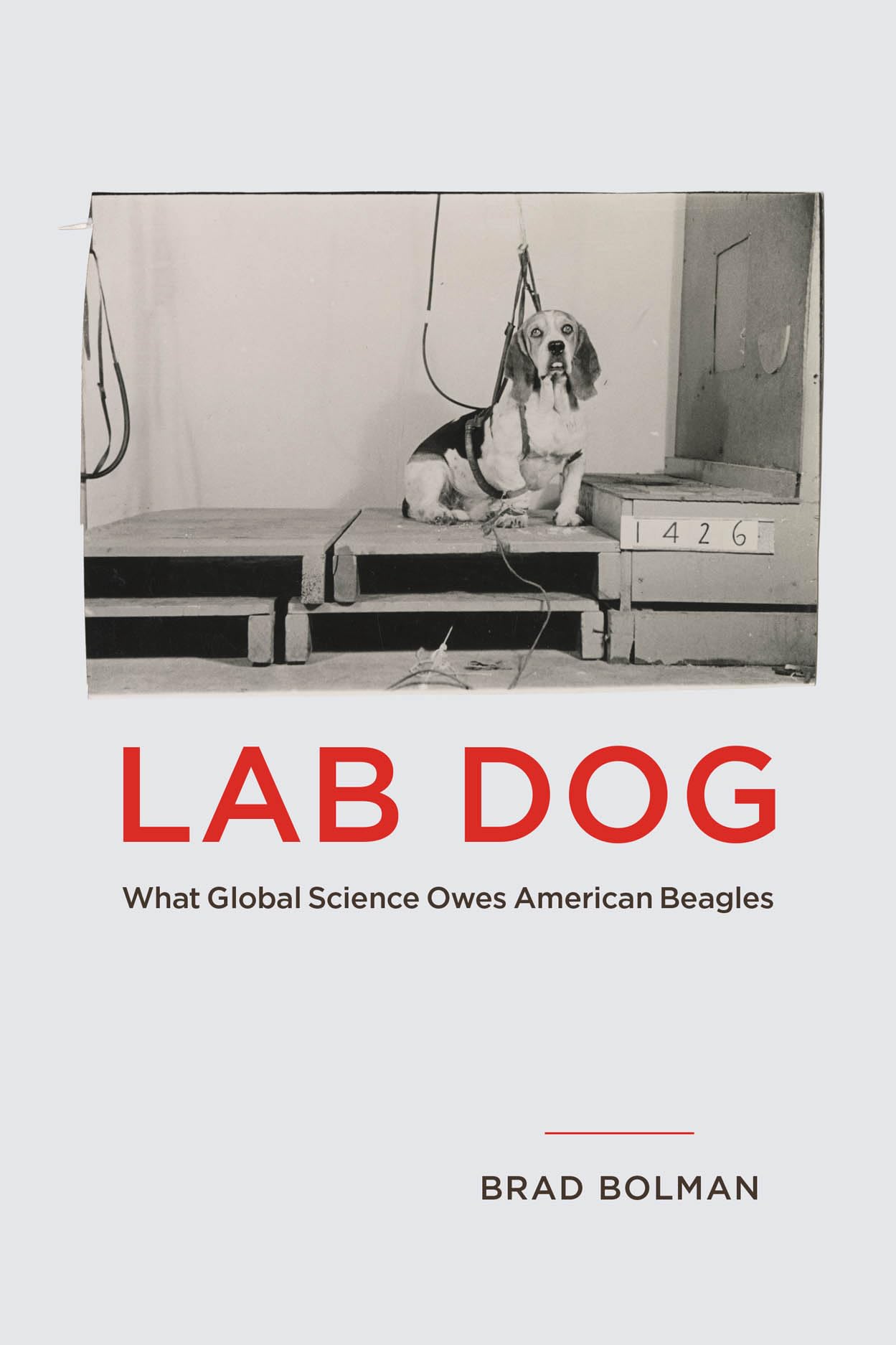
Tracing over a century of transformation in the relationship between humans and our “best friend,” from hunting companion to laboratory commodity to modern pet. Intrepid, docile, and cloaked in coats of white, black, and tan, beagles were one of the most popular breeds in the United States in the twentieth century. From Snoopy to dog shows, many Americans loved and identified with beagles. But during the same period, as scientists searched for a standard research dog, beagles emerged as something else: an ideal animal for laboratory experimentation. In Lab Dog , historian Brad Bolman explains how the laboratory dog became a subject of intense focus for twentieth-century scientists and charts the beagle’s surprising trajectory through global science. Following beagles as they moved from eugenics to radiobiology, pharmaceutical testing to Alzheimer’s studies, Lab Dog sheds new light on pivotal stories of twentieth-century science, including the Manhattan Project, tobacco controversies, contraceptive testing, and behavioral genetics research. Bolman shows how these experiments shaped our understanding of dogs as intelligent companions who deserve moral protection and socialization—and in some cases, daily medication. Compelling and accessible, Lab Dog tells the thorny story of the participation of beagles in science, including both their sacrifices and their contributions, and offers a glimpse into the future of animal experimentation. “Bolman keeps a nuanced focus on how the beagle’s trajectory sheds light on what it means for an animal to be considered more ‘human’ than others, and on how the practices of breeders and kennel clubs intertwined in surprising ways with those of scientific research institutions. The result is an intriguing deconstruction of a little discussed, ethically complex issue.” ― Publishers Weekly “With its extensive scholarship and historical analysis framed by attention to issues of multispecies justice, the book is a triumph.” ― Science “ Lab Dog is a brilliant book. . . . Bolman’s history of what might seem a niche subject is, in fact, an original and illuminating exploration of key aspects of the biological and biomedical sciences in the twentieth century. The arguments are clearly set out, and the writing is engaging.” ― Metascience “A fascinating and meticulously researched history of how beagles came to be a standardized laboratory dog breed, and how these dogs and the scientists who worked with them, shaped both human and animal health in the long twentieth century. . . . Bolman makes groundbreaking contributions to animal history, the history of science/medicine, and to a lesser extent, economic history.” ― Social History of Medicine “Bolman skillfully explains the cultural, economic, and scientific aspects of the American beagle’s transformation, making both this history and the science itself accessible to nonspecialists.” ― Choice “Beagles are very popular companion dogs and also very popular among breeding facilities and research laboratories where they live highly compromised lives, all 'in the name of research' to help humans. Many, if not most people, have no idea what goes on behind these closed doors. I've often wondered why these wonderful dogs rather than others wound up being used for a sorts of research, and now I know because of Dr. Brad Bolman's excellent new book Lab Dog: What Global Science Owes American Beagles .” ― Psychology Today “It is no accident that reports and images of dogs in laboratories have been so successful in galvanizing antivivisection groups and their campaigns. Bolman’s fascinating study of laboratory beagles in American biomedicine addresses these disquieting concerns head-on, analyzing how science changed beagles, and beagles changed science. . . . An impressive account of beagle research and its complex trajectories in the United States, which tackles the challenging and emotionally charged topic with admirable rigor.” ― Journal of the History of Biology “Bolman’s Lab Dog can take its place amongst the best histories of model organism science―alongside, say, Robert Kohler’s Lords of the Fly and Karen Rader’s Making Mice . It is a dog person’s historiography that insists on doggy difference.” ― Centaurus “ Lab Dog: What Global Science Owes American Beagles follows beagles’ paws down the neon-lit corridors of biomedical research. . . . Beyond its historiographical contributions, the book models a methodology that positions the animal as the organizing subject across diverse research contexts, offering a valuable template for future work in animal studies and the history of science.” ― H-Sci-Med-Tech “This isn’t just a book for the beagle obsessed: Bolman has found something for everyone fascinated by our most ancient friendship in the animal kingdom. Laboratory dogs may be a side of the human-canine relationship that most people would prefer not to think about, but Bolman has a kn
More Information
| Gtin | 09780226839745 |
| Age_group | ADULT |
| Condition | NEW |
| Gender | UNISEX |
| Product_category | Gl_book |
| Google_product_category | Media > Books |
| Product_type | Books > Subjects > Science & Math > Nature & Ecology > Animal Rights |