
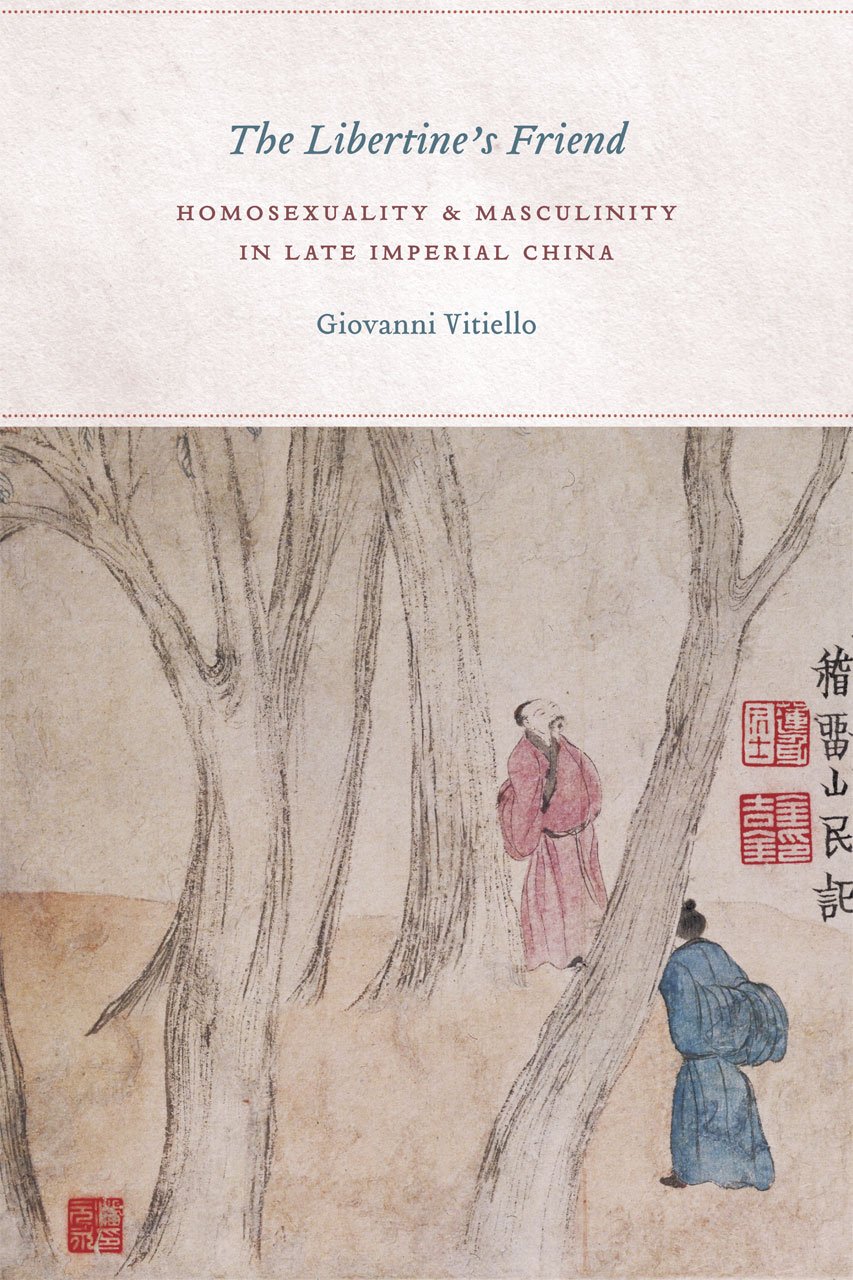
Description
Delving into three hundred years of Chinese literature, from the mid-sixteenth century to the mid-nineteenth, The Libertine’s Friend uncovers the complex and fascinating history of male homosexual and homosocial relations in the late imperial era. Drawing particularly on overlooked works of pornographic fiction, Giovanni Vitiello offers a frank exploration of the importance of same-sex love and eroticism to the evolution of masculinity in China. Vitiello’s story unfolds chronologically, beginning with the earliest sources on homoeroticism in pre-imperial China and concluding with a look at developments in the twentieth century. Along the way, he identifies a number of recurring characters—for example, the libertine scholar, the chivalric hero, and the lustful monk—and sheds light on a set of key issues, including the social and legal boundaries that regulated sex between men, the rise of male prostitution, and the aesthetics of male beauty. Drawing on this trove of material, Vitiello presents a historical outline of changing notions of male homosexuality in China, revealing the integral part that same-sex desire has played in its culture. “This is an ambitious study that analyzes a long list of erotic and romantic fiction from the late Ming to the late Qing to argue that male homosexuality provides a somewhat unlikely arena in which the notions and institutions of gender, love, ethics, law, and politics are brought into play. Against the common wisdom that regards premodern Chinese homosexuality either as an infamous sexual custom or as an illicit underground culture, Vitiello suggests that same-sex love has always played a key part in the Chinese practice and imagination of human relationships. Through mapping out the fictional cartography of Chinese male desire, Vitiello questions the boundaries of masculinity, an issue that arguably continues to occupy the minds of both Chinese men and women.” -- David Der-wei Wang, Harvard University “ The Libertine’s Friend is a lively study of same-sex love and desire in late imperial China in both pornographic and nonpornographic fiction, concluding with an excellent epilogue on the suppression of that rich tradition in the early twentieth century. Besides supplying a fine description of a broad range of fiction about homoerotic love, Giovanni Vitiello traces for the first time the chronology of the sublimation of same-sex desire that begins in the mid to late Qing period as the libertine loses his sexual side and devotes himself to a sublime love that transcends carnal relations. There is nothing like Chinese pornography in any other tradition. Its suppression means there is still much to be said about it—Vitiello fills that gap in a vivid, witty style and with a commanding knowledge of the topic.” -- Keith McMahon, University of Kansas "In this rich and original study of male homoeroticism in late imperial Chinese fiction, Giovanni Vitiello focuses on how interlinking and shifting discourses of masculinity and sexuality manifest in the depictions of male protagonists, including the chivalric hero, the romantic scholar, and the sexy libertine in late Ming to late Qing pornographic and non-pornographic works. . . . In doing so, his work is an example of the growing theoretical commitment of scholars of historical Chinese (and other Asian) homosexualities to take into account historical ideas and practices of masculinity." -- Derek Hird ― H-Histsex Giovanni Vitiello is associate professor of Chinese at the University of Hawai’i at Manoa. THE LIBERTINE'S FRIEND Homosexuality and Masculinity in Late Imperial China By GIOVANNI VITIELLO THE UNIVERSITY OF CHICAGO PRESS Copyright © 2011 The University of Chicago All right reserved. ISBN: 978-0-226-85792-3 Contents Acknowledgments..............................ixIntroduction.................................11. Male Beauty...............................152. Friendship and Love.......................533. Libertine Masculinity.....................934. Hybrid Heroes.............................1325. The Male Romance..........................166Epilogue.....................................200Notes........................................211Glossary.....................................255Bibliography.................................265Index........................................285 Chapter One Male Beauty In the late imperial sources, a number of factors align to distinguish the ideal boy from his adult pursuer. These factors—which involve age, social status, and gender and sexual roles—fundamentally confirm the gap between men and boys when it comes to homoerotic relations and desire found in the pre-imperial sources reviewed in the introduction. Normative homosexual relations during this period involved one of the partners being a teenager, as young as twelve and as old as twenty, ideally sixteen sui —roughly fifteen years old. The age gap corresponds to a disparity in social stations,
More Information
| Gtin | 09780226857923 |
| Age_group | ADULT |
| Condition | NEW |
| Gender | UNISEX |
| Product_category | Gl_book |
| Google_product_category | Media > Books |
| Product_type | Books > Subjects > Literature & Fiction > History & Criticism > Regional & Cultural > Asian > Chinese |