
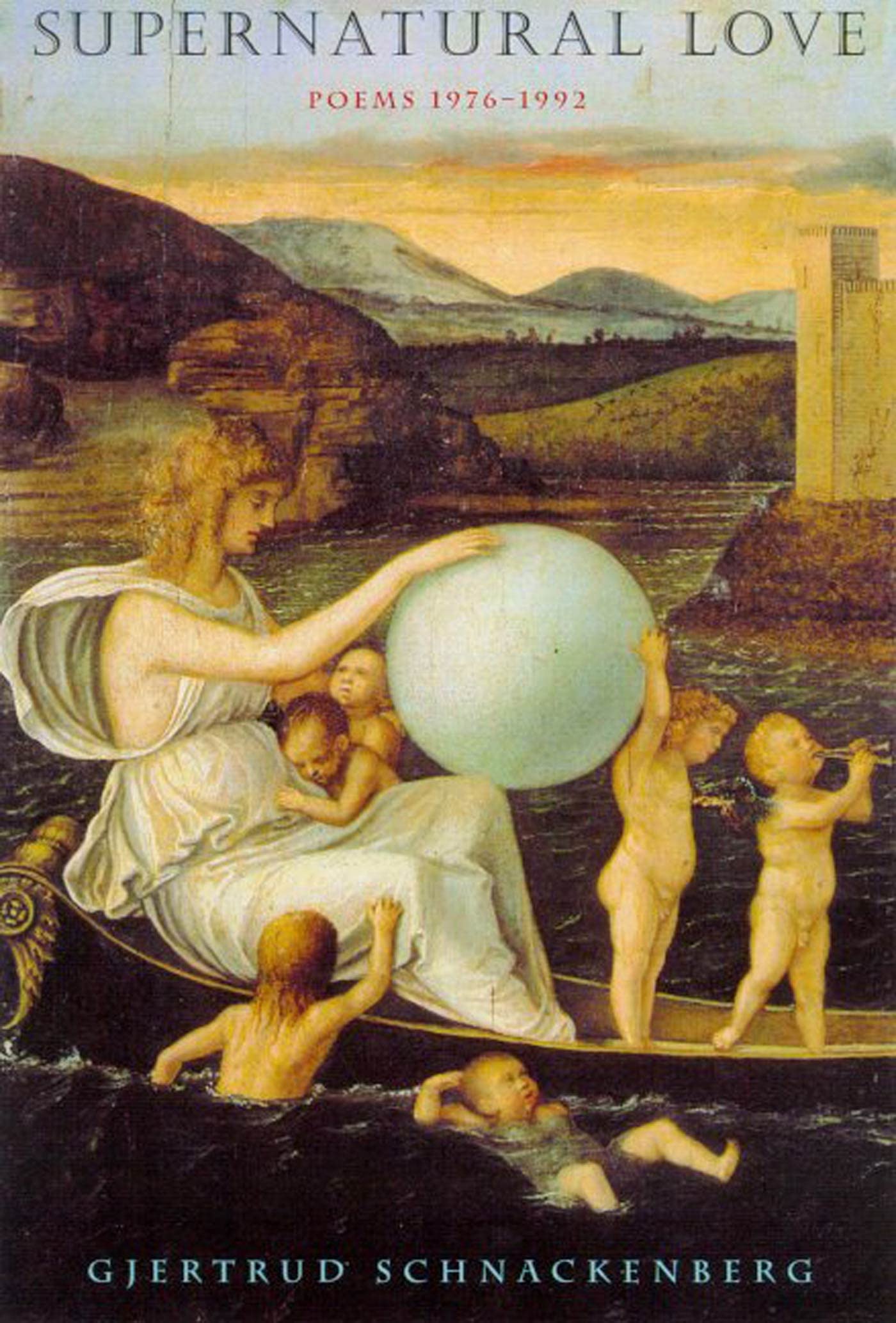
Description
The poet Gjertrud Schnackenberg, whom William Logan once called "the most talented American poet under the age of forty," published her first book of poems in 1982. She has since become one of our most respected authors of verse. Schnackenberg's first three books, collected in Supernatural Love , show the thrilling evolution of a unique voice in today's letters. From an early mastery in which precision and heartbreak are inseparable, her poetry accelerates book by book through the searching, dense, and metaphysical imagery--as well as the cascading syntax--which have become her signature. Whether we are witnessing her classic portrait of Darwin in his last year or discovering the vertiginous brillance of her elegy for the Byzantine monuments of Ravenna, we find in Schnackenberg gemlike poems offered as visionary documents, unmistakable in their glittering range and passion--and never the same twice. Schnackenberg does not write the intimate little odes so dear to the hearts of many of today's current writing instructors. Grand and imposing, her poems storm through civilization, paying homage to art's greatest figures in language that is formal, articulate, and cool and glittering as a knife. Even when she touches on personal issues her neighbors, her father's death she works large. This year, she coupled a fine selected works with a new book-length poem that plunges back into Greek myth, ultimately investigating the tension between art and life. Decidedly different reading. Copyright 2001 Reed Business Information, Inc. “[Schnackenberg] submits the claims of aesthetic form to a searing interrogation . . . a visionary encounter with 'the source of poetry.'” ― Rosanna Warren, The New Republic “Profound, sweeping, emotional . . . One thinks of Blake's insight, 'Eternity is in love with the productions of time.'” ― Stephen Yenser, The Yale Review “A dazzler . . . Rich, even ornate at times, [Schnackenberg's] poetry carries its weight as if it were no weight at all, by its thematic intensity and by the sheer beauty of its imagery.” ― Richard Eder, Los Angeles Times Gjertrud Schnackenberg was born in Tacoma, Washington, in 1953. The Throne of Labdacus (FSG, 2000) received the Los Angeles Times Book Prize in Poetry. She graduated from Mount Holyoke, and was awarded an honorary doctorate from that college in 1985. She has also received the Lavan Younger Poets Award (judged by Robert Fitzgerald) from the Academy of American Poets, and the Rome Prize in Literature from the American Academy and Institute of Arts and Letters. Excerpt 1. NIGHTFISHING The kitchen's old-fashioned planter's clock portrays A smiling moon as it dips down below Two hemispheres, stars numberless as days, And peas, tomatoes, onions, as they grow Under that happy sky; but though the sands Of time put on this vegetable disguise, The clock covers its face with long, thin hands. Another smiling moon begins to rise. We drift in the small rowboat an hour before Morning begins, the lake weeds grown so long They touch the surface, tangling in an oar. You've brought coffee, cigars, and me along. You sit still, like a monument in a hall, Watching for trout. A bat slices the air Near us, I shriek, you look at me, that's all, One long sobering look, a smile everywhere But on your mouth. The mighty hills shriek back. You turn back to the hake, chuckle, and clamp Your teeth on your cigar. We watch the black Water together. Our tennis shoes are damp. Something moves on your thoughtful face, recedes. Here, for the first time ever, I see how, Just as a fish lurks deep in water weeds, A thought of death will lurk deep down, will show One eye, then quietly disappear in you. It's time to go. Above the hills I see The faint moon slowly dipping out of view, Sea of Tranquillity, Sea of Serenity, Ocean of Storms ... You start to row, the boat Skimming the lake where light begins to spread. You stop the oars, midair. We twirl and float. I'm in the kitchen. You are three days dead. A smiling moon rises on fertile ground, White stars and vegetables. The sky is blue. Clock hands sweep by it all, they twirl around, Pushing me, oarless, from the shore of you. 2. INTERMERZZO Steinway in German script above the keys, Letters like dragons curling stiff gold tails, Gold letters, ivory keys, the black wood cracked By years of sunlight, into dragon scales. Your music breathed its fire into the room. We'd hear jazz sprouting thistles of desire, Or jazz like the cat's cry from beneath The passing tire, when you played the piano Afternoons; or "Au Clair de la Lune." Scarlatti's passages fluttered like pages. Sometimes you turned to Brahms, a depth, more true, You studied him to find out how he turned Your life into a memory for you. In Number 6 of Opus 118, Such brief directions, Andante, sotto voce : The opening notes like single water drops Each with an oceanic undertow That pulled you deeper even a
More Information
| Gtin | 09780374527549 |
| Mpn | Refer To Sapnet. |
| Age_group | ADULT |
| Condition | NEW |
| Gender | UNISEX |
| Product_category | Gl_book |
| Google_product_category | Media > Books |
| Product_type | Books > Subjects > Literature & Fiction > Poetry > Regional & Cultural > United States |