
Description
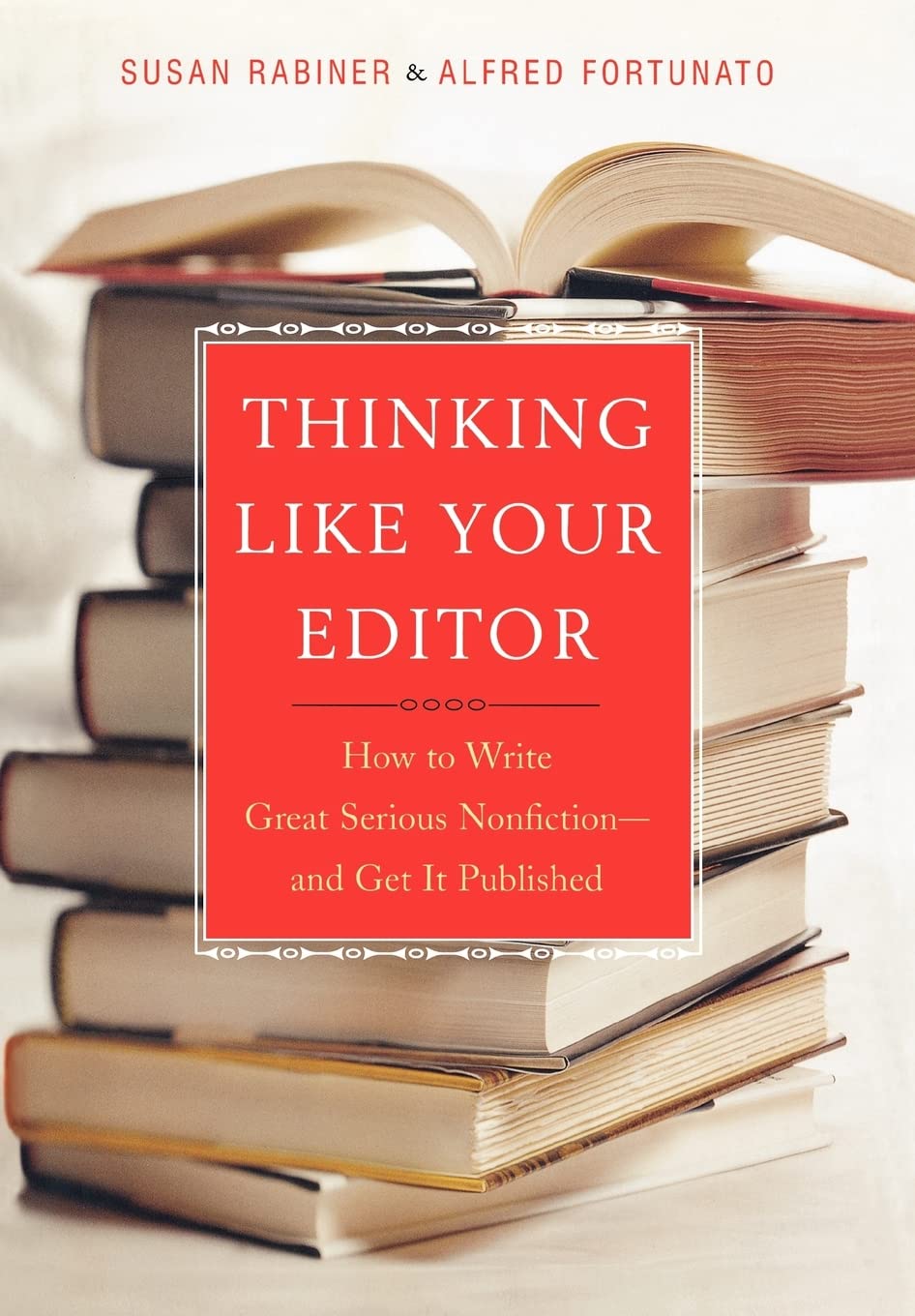
Distilled wisdom from two publishing pros for every serious nonfiction author in search of big commercial success. Over 50,000 books are published in America each year, the vast majority nonfiction. Even so, many writers are stymied in getting their books published, never mind gaining significant attention for their ideas―and substantial sales. This is the book editors have been recommending to would-be authors. Filled with trade secrets, Thinking Like Your Editor explains: • why every proposal should ask and answer five key questions; • how to tailor academic writing to a general reader, without losing ideas or dumbing down your work; • how to write a proposal that editors cannot ignore; • why the most important chapter is your introduction; • why "simple structure, complex ideas" is the mantra for creating serious nonfiction; • why smart nonfiction editors regularly reject great writing but find new arguments irresistible. Whatever the topic, from history to business, science to philosophy, law, or gender studies, this book is vital to every serious nonfiction writer. Rabiner, a former editorial director at Basic Books, and freelance editor Fortunato are now partners in the Susan Rabiner Literary Agency. Their book (like their agency) targets those who write serious or scholarly nonfiction but hope to reach a wide audience. They begin with the usual fantasy sequence, leading readers through a discussion about which publisher they should select for their work university press or other. The book then explains in detail why authors must do research and present balanced arguments in their writing and why they must also have tangible credibility but write with a sense of narrative to appeal to a wider audience. These are basics, stress the authors, that must be mastered before an aspiring writer can hope to start speculating about how to spend the advance. The authors advise writers to approach editors first and give tips on how to do so; agents, they explain, are readily acquired in the wake of success. Better than average, this title mostly avoids feeding fantasies in favor of detailing necessities. Robert Moore, Parexel Intl., Waltham, MA Copyright 2002 Cahners Business Information, Inc. If you want to publish, it's not enough to have a great idea or be a great writer, argue the authors. Far more important are skills in research, interpretation, and self-presentation. Most important is conceiving a book that has an obvious appeal to a broad audience and being able to articulate that appeal to an editor. After all, "the first job of any book is to get itself read." Rabiner, with 25 years of experience in publishing, has teamed with her freelancer husband to provide a pragmatic guide to serious nonfiction, from conception through composition to commercial sale. Lest it strike the bookish that the idea of art has been forfeited, it's clear the authors are book people, too. Many how-to's have been written by the dubiously credentialed. This one by Rabiner, with her inside knowledge, has a clear and positive effect and is eminently readable, rising above plodding minutiae while avoiding pie-in-the-sky pep talks and generalizations. No doubt this work will help turn ideas and manuscripts into bound, dust-jacketed books. Keir Graff Copyright © American Library Association. All rights reserved "Avoids feeding fantasies in favor of detailing necessities." ― Library Journal "Starred Review. Useful advice on every page." ― Publishers Weekly "Rabiner and Fortunato take you through the corporate Oz of the publishing world, behind the smoke and mirrors." ― Dale Maharidge, author of And Their Children After Them , winner of the 1990 Pulitzer Prize in nonfiction "What a smart and useful book Thinking Like Your Editor is." ― Gerald Howard, editorial director, Broadway Books "[W]ill be the standard text for non-fiction authors." ― Herbert P. Bix, author of Hirohito , winner of the 2001 Pulitzer Prize "In 45 years in publishing I have never read better advice than this book offers. Bravo!" ― Hugh Van Dusen, HarperCollins Publishers "The path from good idea to great book is anything but a straight line, Rabiner and Fortunato know every precipice and crevice." ― John Paulos, author of A Mathematician Reads the Newspaper "Likely to become the gold standard for anyone hoping to be successful in trade publishing." ― Juliet B. Schor, author of The Overworked American "[S]hould be required reading for any writer of serious nonfiction." ― Laura N. Brown, president, Oxford University Press USA "This smart, straight-talking, profoundly encouraging book is an invaluable guide for authors and editors alike." ― Sara Bershtel, Associate Publisher, Metropolitan Books Susan Rabiner is the former editorial director of Basic Books. She was a senior editor at Oxford University Press and Pantheon Books. Alfred Fortunato is a freelance editor and writer.
More Information
| Gtin | 09780393038927 |
| Mpn | Refer To Sapnet. |
| Age_group | ADULT |
| Condition | NEW |
| Gender | UNISEX |
| Product_category | Gl_book |
| Google_product_category | Media > Books |
| Product_type | Books > Subjects > Reference > Writing, Research & Publishing Guides > Publishing & Books > Authorship |