
Description
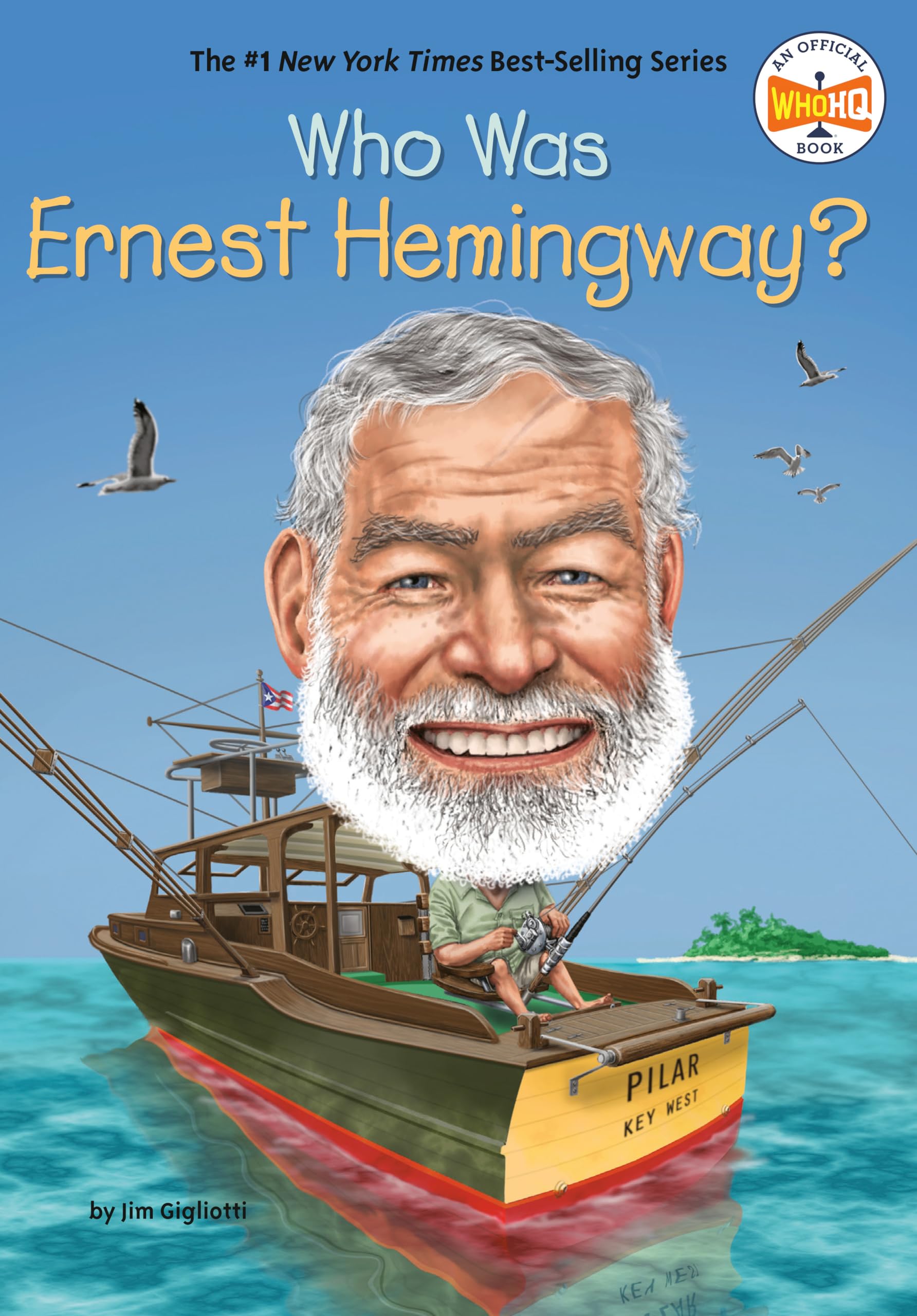
Find out how a journalist and sportsman became one of the most famous American novelists of the twentieth century in this new addition to the #1 New York Times bestselling series! Ernest Hemingway wasn't just a novelist. He was a hunter and a fisherman; he became an ambulance officer in Paris, France, during World War I; and he worked as a reporter during the civil war in Spain in the 1930s. All of these experiences had such an important impact on Ernest's life that he used them as inspiration for some of his most notable works of fiction, including The Sun Also Rises , A Farewell to Arms , and For Whom the Bell Tolls . He wrote short stories, novels, and articles in an understated, direct style, that is still beloved by readers today. Hemingway is remembered as much for his fiction as he is for his adventurous lifestyle. Jim Gigliotti is a writer based in Southern California. A former editor at the National Football League, he has written more than 50 books for readers of all ages, including biographies for young readers on Olympian Jesse Owens, baseball star Roberto Clemente, scientist Nikola Tesla, and musician Stevie Wonder. Who Was Ernest Hemingway? The big bear stopped in the middle of the road. It was somewhere “out West,” Ernest Hemingway said. It might have been in Idaho, or maybe it was Montana. The bear stood on its hind legs. It roared at any car that tried to pass by. The bear would not budge. The cars either turned back or went the long way around. After a while, no one could use the road. All the drivers were scared of the huge animal. But not Ernest. He wasn’t scared. He was mad. He drove right up to where the bear was standing. He got out of his car and yelled at the beast. What did the animal think it was doing? “Do you realize that you’re nothing but a miserable, common black bear?” Ernest said. The bear went down from its hind legs. It slinked to the side of the road on all fours. It never bothered the cars again. Did this story really happen? Ernest sure could tell it like it had. That was his great gift: He was an amazing storyteller. Ernest liked to tell his friends about the time he landed the biggest sailfish ever caught in the Atlantic Ocean. Then there was the time he claimed to have met enemy spy Mata Hari during World War I. And the time he saved an African village from a lion that was lurking near its fields at night. Some of the stories were true. Most were a little bit true. A few weren’t true at all. But Ernest wasn’t known all around the world because he told stories about himself to his friends. He became famous because he wrote books and stories that are still read by millions of people today, more than sixty years after his death. He wrote The Sun Also Rises, A Farewell to Arms, The Old Man and the Sea—-some of the best--known books in American literature. In all, he wrote more than twenty books and more than fifty short stories. Most of Ernest’s books and stories were fiction, which means they were made up. But they all seem to have in them some details of events that really happened to Ernest. He really did travel to Spain for the bullfights, like the people in The Sun Also Rises. He was on the front lines of World War I, like his main character in A Farewell to Arms. He worked hard to catch huge fish in the ocean, like the fisherman in The Old Man and the Sea. Sometimes it was hard to tell where real events stopped and the fiction began. Ernest was always in search of adventure. He looked for situations that would test his courage and his ability to perform under pressure. Then he used those experiences to write stories that are still meaningful to readers today. However, his stories aren’t important only for what he wrote about. They also are important for how he wrote them. Ernest wrote in a new way, with short sentences that got right to the point. He didn’t use many adjectives to describe things. And he often didn’t choose to use big words. Ernest Hemingway became one of the most important authors in American history. His unique style has influenced many other writers—-even to this day. Chapter 1: Young Storyteller When Ernest Hemingway was a little boy, his mother once asked him what he was afraid of. “’Fraid a nothin’!” Ernest said. That was the truth! Young Ernest would try just about anything. He was only three years old when he went fishing for the first time. Not long after that, he learned to start a campfire. By the time he was five, he knew how to hunt. Ernest was born on July 21, 1899, in Oak Park, Illinois, not far from the city of Chicago. His father, Clarence Edmonds Hemingway, usually called Ed, was a doctor. His mother, Grace, was a music teacher. She had dreamed of being an opera singer when she was younger. When Ernest was born, the Hemingway family lived with Grace’s father. Ed and Grace had fallen in love when the doctor was a regular visitor at the house to
More Information
| Color | Multicolor |
| Gtin | 09780399544156 |
| Mpn | 9780399544156 |
| Age_group | ADULT |
| Condition | NEW |
| Gender | UNISEX |
| Material | Cellulose-based Or Similar Non-woven Material |
| Product_category | Gl_book |
| Google_product_category | Media > Books |
| Product_type | Books > Subjects > Children's Books > Biographies > Literary |