
Description
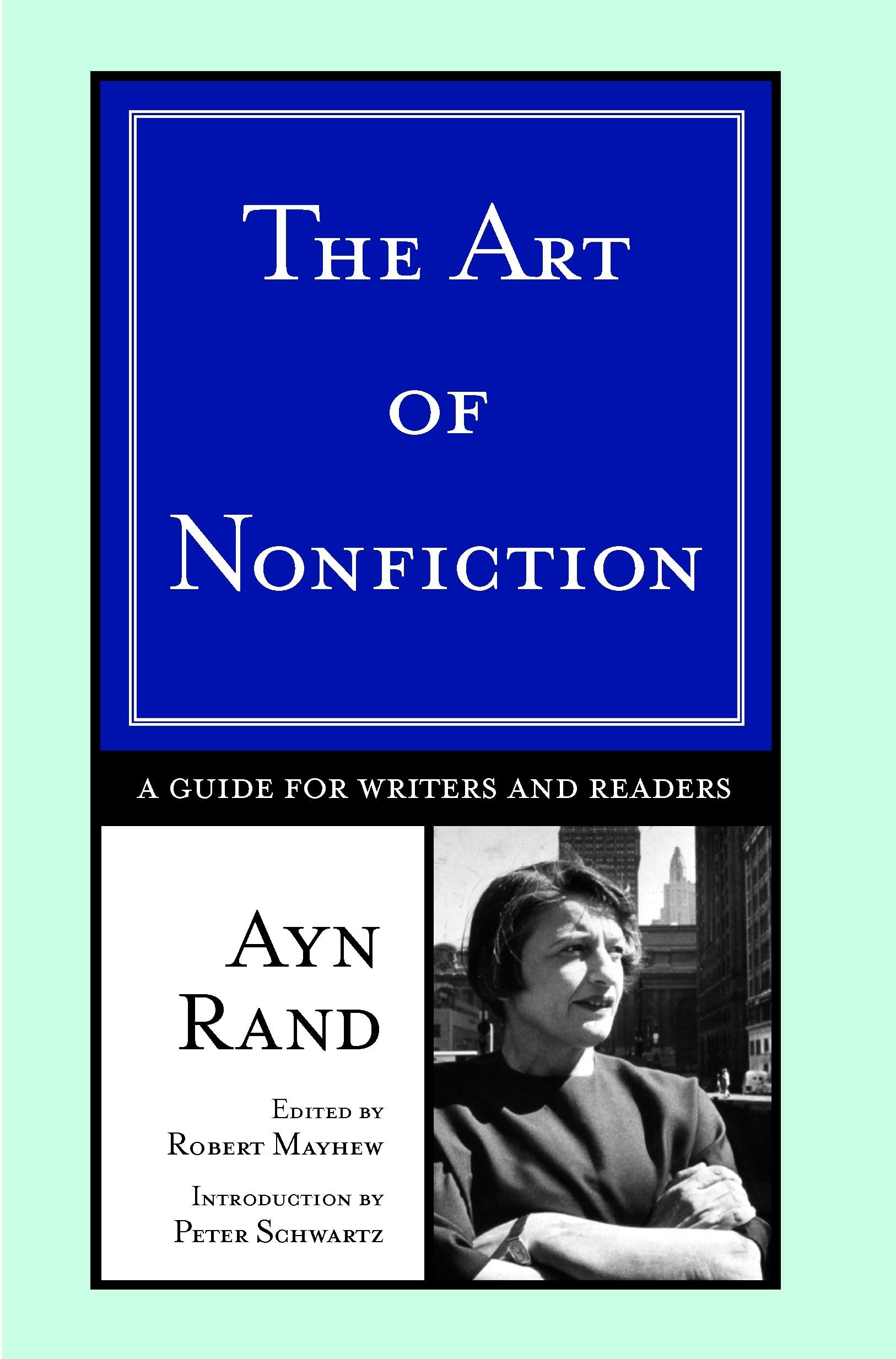
A remarkable series of lectures on the art of creating effective nonfiction by one of the 20th century's most profound writers and thinkers--now available for the first time in print. Culled from sixteen informal lectures Ayn Rand delivered to a select audience in the late 1960s, this remarkable work offers indispensable guidance to the aspiring writer of nonfiction while providing readers with a fascinating discourse on art and creation. Based on the concept that the ability to create quality nonfiction is a skill that can be learned like any other, The Art of Nonfiction takes readers through the writing process, step-by-step, providing insightful observations and invaluable techniques along the way. In these edited transcripts, Rand discusses the psychological aspects of writing, and the different roles played by the conscious and unconscious minds. From choosing a subject to polishing a draft to mastering an individual writing style--for authors of theoretical works or those leaning toward journalistic reporting--this crucial resource introduces the words and ideas of one of our most enduring authors to a new generation. In The Art of Nonfiction , Ayn Rand spends six pages explaining why something she wrote about the launching of Apollo II is far superior to something Loudon Wainwright wrote about it; throughout the book, she uses her own work as examples of exemplary writing. Somehow, though, Rand's robust ego is less unbearable here than it is in, say, her Art of Fiction . This book is a frank demystification of the writing process that originated as a series of lectures given in 1969 to friends and other potential contributors to Rand's magazine, The Objectivist . "Any person who can speak English grammatically can learn to write nonfiction," Rand declares. All you need "is what you need for life in general: an orderly method of thinking." Rand values clarity above all else in nonfiction writing, and it is her own clearheadedness that makes this book appealing. Within these pages, Rand discusses subject and theme, audience, philosophy, outlines, writing, and editing. She takes swipes at The New Yorker for its "'brilliant' essays that say nothing," and at William Buckley, whose "trademark is to use words he probably spends half his time looking up in the dictionary." She rails against disruptions ("When I was writing Atlas Shrugged , I accepted neither day nor evening appointments, with rare exceptions, for roughly thirteen years"). And she is an exacting taskmaster who demands that you not choose a lesser aspect of a subject than "the deepest one that interests you and that you can do." Finally, says Rand, you must write from a position of complete confidence and omnipotence. "While you are writing," she says, "you must be God's perfect creature (if there were a God)." --Jane Steinberg In 1969, Rand gave a series of lectures to followers who wished to write for her Objectivist magazine. Best known for her novels The Fountainhead and Atlas Shrugged, Rand later wrote extensively on the philosophy that underlay her fiction. This is a transcript of her lectures on writing nonfiction, edited by Rand scholar Mayhew, who previously edited Rand's Marginalia. Though frequently sound, Rand's advice is obscured by philosophical jargon and has little to offer to the general reader seeking guidance on how to write. Moreover, readers may be put off by Rand's dogmatic style, her use of examples from her own writing, and her assumption that readers share her political beliefs. One of Rand's more helpful hints is to avoid misleading titles; given her view of writing as a technical process that anyone can learn, the editors clearly ignored her advice. Recommended for libraries where there is strong interest in Rand's life and work. Susan M. Colowick, North Olympic Lib. Syst., Port Angeles, WA Copyright 2001 Reed Business Information, Inc. Some of the most compelling passages in Journals of Ayn Rand (1997) are Rand's reflections on the craft of writing, a subject she attacks with her signature pragmatism in this useful and entertaining book about constructing nonfiction. Drawn from a series of talks she presented to friends and associates in 1969, these smart and pithy discussions are based on the belief that writing can be taught and learned like a science: no pining for the muse here. Rand talks knowledgeably and energetically about clarity, selectivity, style, organization, editing, the "squirms" (when writing just won't flow) and how to beat them: remind yourself that you're writing for your own pleasure. Her sage advice is spiked with Objectivism, her ruthless philosophy, which lends an imperial air, such as when she declares, "If you are not Aristotelian all the way down, it is no moral crime; but it will cause problems, so train yourself to be one." Brilliant and opinionated, Rand is one peppery writing instructor. Donna Seaman Copyright © American Library Association. All rights reserved Bo
More Information
| Color | Multicolor |
| Gtin | 09780452282315 |
| Mpn | Refer To Sapnet. |
| Age_group | ADULT |
| Condition | NEW |
| Gender | UNISEX |
| Product_category | Gl_book |
| Google_product_category | Media > Books |
| Product_type | Books > Subjects > Reference > Writing, Research & Publishing Guides > Publishing & Books > Authorship |