
Description
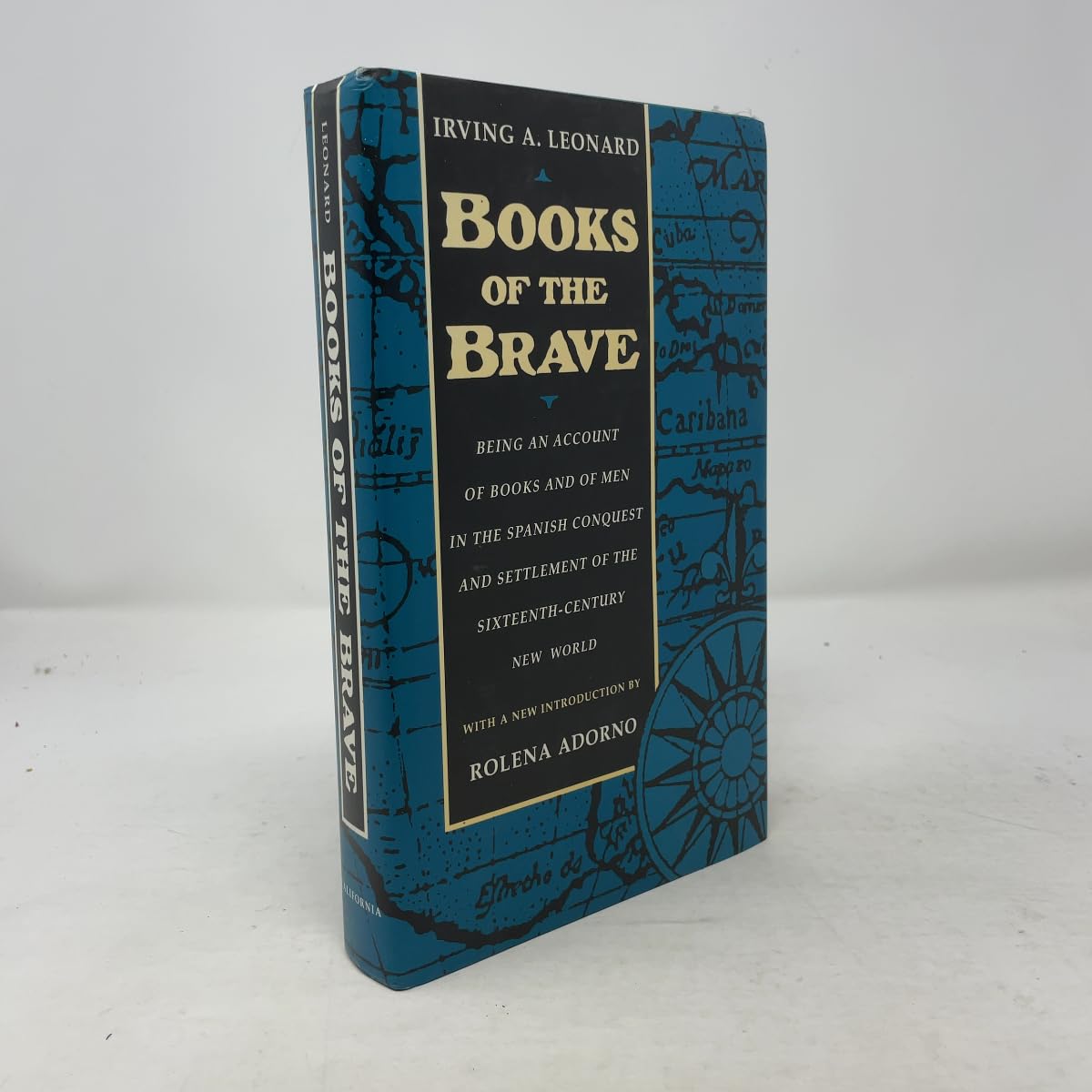
Since its original publication in 1949, Irving A. Leonard's pioneering Books of the Brave has endured as the classic account of the introduction of literary culture to Spain's New World. Leonard's study documents the works of fiction that accompanied and followed the conquistadores to the Americas and goes on to argue that popular texts influenced these men and shaped the way they thought and wrote about their New World experiences. For the first time in English, this edition combines Leonard's text with a selection of the documents that were his most valuable sources―nine lists of books destined for the Indies. Containing a wealth of information that is sure to spark future study, these lists provide the documentary evidence for what is perhaps Leonard's greatest contribution: his demonstration that royal and inquisitorial prohibitions failed to control the circulation of books and ideas in colonial Spanish America. Rolena Adorno's introduction signals the lasting value of Books of the Brave and brings the reader up to date on developments in cultural-historical studies that have shed light on the role of books in Spanish American colonial culture. Adorno situates Leonard's work at the threshold between older, triumphalist views of Spanish conquest history and more recent perspectives engendered by studies of native American peoples. With its rich descriptions of the book trade in both Spain and America, Books of the Brave has much to offer historians as well as literary critics. Indeed, it is a highly readable and engaging book for anyone interested in the cultural life of the New World. Irving A. Leonard is Professor Emeritus of Romance Languages and Hispanic American History at the University of Michigan and the author of many works on colonial Spanish America. Rolena Adorno is Professor of Romance Languages and Literatures at Princeton University. She is the author of Guaman Poma: Writing and Resistance in Colonial Peru (1986) and co-editor of Transatlantic Encounters: Europeans and Andeans in the Sixteenth Century (California, 1991). Books of the Brave: Being an Account of Books and of Men in the Spanish Conquest and Settlement of the Sixteenth-Century New World By Irving A. Leonard University of California Press Copyright © 1992 Irving A. Leonard All right reserved. ISBN: 0520079906 I The Spanish Conquistador The extraordinary actions and adventures of these men, while they rival the exploits recorded in chivalric romance, have the additional interest of verity. They leave us in admiration of the bold and heroic qualities inherent in the Spanish character which led that nation to so high a pitch of power and glory, and which are still discernible in the great mass of that gallant people by those who have an opportunity of judging them rightly. Washington Irving1 The cause of the killing and destroying such an infinite number of souls by the Christians [i.e., Conquistadors] has been simply that their whole end was to acquire gold and riches in the shortest time so that they might rise to lofty positions out of all proportion to their wealth: in a word, the cause of such ills has been their insatiable ambition and covetousness.... Bartolomé de las Casas2 Of these two quotations inspired by the deeds of the Spanish conquerors in America, the second probably accords more closely with the impression held by the majority of that unnumbered throng who have been stirred by their prodigious feats. Indeed, its unflattering characterization of these sixteenth-century adventurers remains so firmly established and so pervasive as to partake of the nature of a hallowed tradition which blots out all other considerations. If a momentary skepticism should raise a fleeting doubt of the fairness of such a harsh judgment, this uncertainty is quickly dispelled by the knowledge that this cherished conviction traces its origin to a contemporary Spaniard of world renown, a Dominican clergyman, Bartolomé de las Casas. Thus the Spanish conquerors are condemned forever by the evidence of a star witness, a conspicuous countryman who had seen their works. Why, therefore, examine the matter further? Why regard the Conquistador as anything better than a ruthless brigand? Yet there are good reasons, aside from the obvious special pleading of the great "Apostle of the Indians," to suggest the greater justice of the more dispassionate opinion expressed nearly three centuries later by the North American writer, Washington Irving, in the first quotation. The Spanish Conquistador, like all other human elements before and after him, was the creature of his own age, molded and conditioned by the contemporary influences of his environment. If in retrospect he appears excessively primitive, fanatic, proud, cruel, and romantic, it is only because he reflected more conspicuously than did other Europeans of his age the dominant traits of his own time and of his Western European culture, and o
More Information
| Gtin | 09780520079908 |
| Age_group | ADULT |
| Condition | NEW |
| Gender | UNISEX |
| Product_category | Gl_book |
| Google_product_category | Media > Books |
| Product_type | Books > Subjects > Reference > Writing, Research & Publishing Guides > Publishing & Books > Book Industry |