
Description
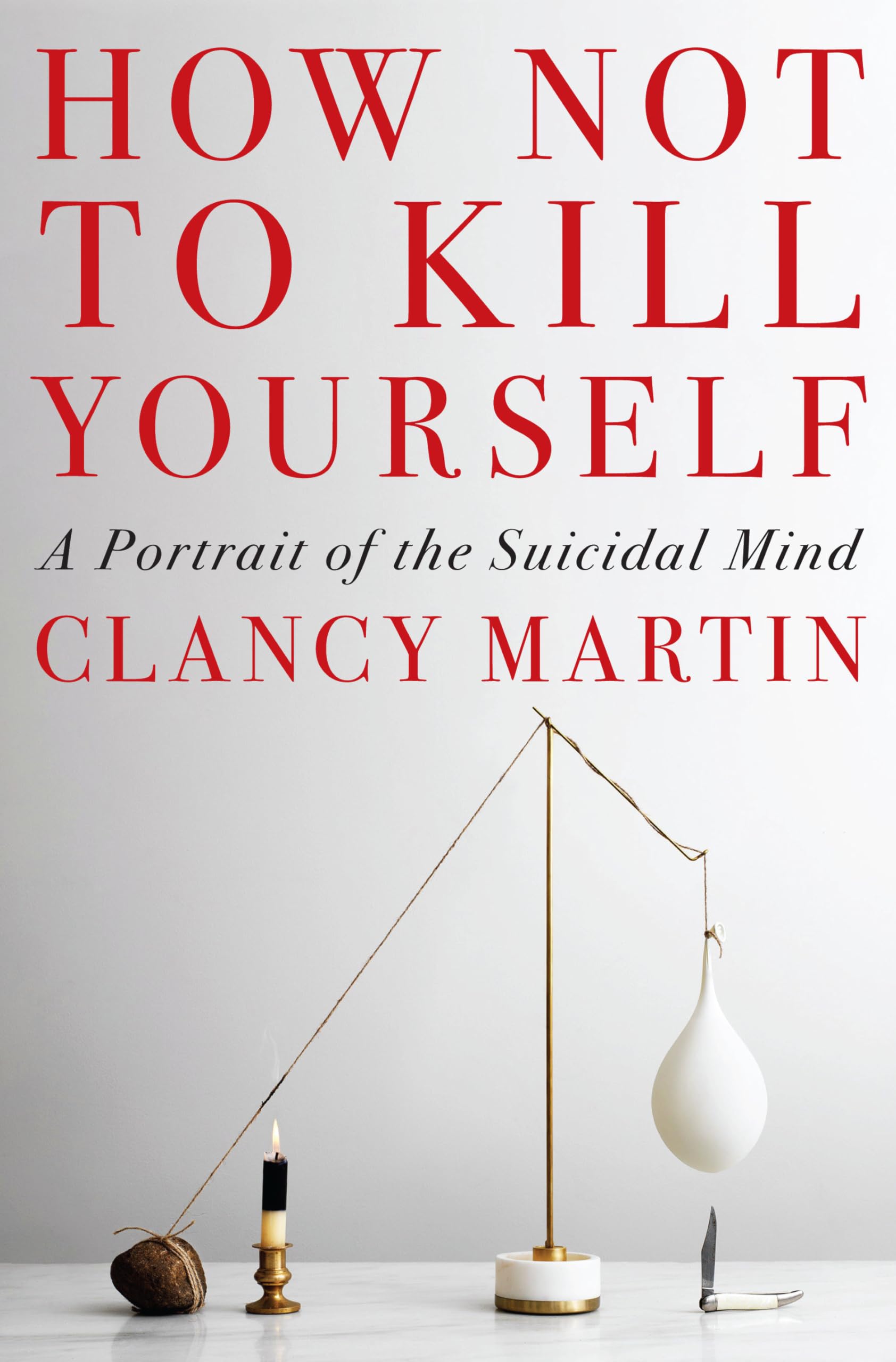
FINALIST FOR THE KIRKUS PRIZE FOR NONFICTION • ONE OF TIME' S 100 MUST-READ BOOKS OF THE YEAR • ONE OF THE NEW YORK TIMES BOOK REVIEW'S CRITICS' PICKS • ONE OF THE BOSTON GLOBE’S 55 BOOKS WE LOVED THIS YEAR • ONE OF KIRKUS ’S BEST NONFICTION BOOKS OF THE YEAR• An intimate, insightful, at times even humorous blend of memoir and philosophy that examines why the thought of death is so compulsive for some while demonstrating that there’s always another solution—from the acclaimed writer and philosophy professor, based on his viral essay, “I’m Still Here.” “A deep meditation that searches through Martin’s past looking for answers about why he is the way he is, while also examining the role suicide has played in our culture for centuries, how it has evolved, and how philosophers have examined it.” — Esquire “A rock for people who’ve been troubled by suicidal ideation, or have someone in their lives who is.” — The New York Times “If you’re going to write a book about suicide, you have to be willing to say the true things, the scary things, the humiliating things. Because everybody who is being honest with themselves knows at least a little bit about the subject. If you lie or if you fudge, the reader will know.” The last time Clancy Martin tried to kill himself was in his basement with a dog leash. It was one of over ten attempts throughout the course of his life. But he didn’t die, and like many who consider taking their own lives, he hid the attempt from his wife, family, coworkers, and students, slipping back into his daily life with a hoarse voice, a raw neck, and series of vague explanations. In How Not to Kill Yourself, Martin chronicles his multiple suicide attempts in an intimate depiction of the mindset of someone obsessed with self-destruction. He argues that, for the vast majority of suicides, an attempt does not just come out of the blue, nor is it merely a violent reaction to a particular crisis or failure, but is the culmination of a host of long-standing issues. He also looks at the thinking of a number of great writers who have attempted suicide and detailed their experiences (such as David Foster Wallace, Yiyun Li, Akutagawa, Nelly Arcan, and others), at what the history of philosophy has to say both for and against suicide, and at the experiences of those who have reached out to him across the years to share their own struggles. The result combines memoir with critical inquiry to powerfully give voice to what for many has long been incomprehensible, while showing those presently grappling with suicidal thoughts that they are not alone, and that the desire to kill oneself—like other self-destructive desires—is almost always temporary and avoidable. Praise for HOW NOT TO KILL YOURSELF A Finalist for the Kirkus Prize for Nonfiction One of The New York Times Book Review ’s Critics’ Picks One of the Boston Globe ’s 55 Books We Loved this Year One of Kirkus's Best Nonfiction Books of The Year One of TIME’s 100 Must-Read Books of the Year A New York Times Book Review Editor’s Choice One of the New York Times ’ 9 New Books We Recommend This Week A Publisher’s Weekly Book of the Week One of The Millions’ Most Anticipated Books of the Year One of Lit Hub’s Most Anticipated Books of the Year “Sui generis . . . a blunt and bracing read . . . as cogent and (yes) rational an account of the mind existing in the shadow of its own self-destruction as I have read . . . For all [Martin’s] focus on suicidal trauma, he is, most fundamentally, trying to write his way out from under it, to create a book not of death but of life.” — David Ulin, The Atlantic “I can see [this book] becoming a rock for people who’ve been troubled by suicidal ideation, or have someone in their lives who is, and want to understand the mentality, which can seem utterly mystifying to the unafflicted. Swirling with anguish and argument, tempered by practicality, it airs an often taboo topic with the authority of someone writing what he knows — all too gruesomely well.” — The New York Times “Candid and at times haunting . . . an urgent call to reframe how we think about suicide and those who struggle with self-destructive thoughts. Martin is never afraid, delving into his most vulnerable moments in detail to humanize a subject that so many are not able to openly discuss. In doing so, Martin crafts a captivating argument about suffering and survival. —TIME, “The 100 Must-Read Books of 2023” “Idiosyncratic, beautiful, and studded with caveats: sometimes this trick won’t work, Martin concedes, and sometimes this other one won’t, either. Even he doesn’t always follow his own advice. It’s an admission of sorts—that so much great literature can be read, that so much work can be done, but that another day to survive is always approaching. The work of choosing to not kill yourself isn’t the act of making that choice one time but making it over and over again.” — The New Yorker “Th
More Information
| Color | Silver |
| Gtin | 09780593317051 |
| Age_group | ADULT |
| Condition | NEW |
| Gender | UNISEX |
| Product_category | Gl_book |
| Google_product_category | Media > Books |
| Product_type | Books > Subjects > Self-Help > Death & Grief > Suicide |