
Description
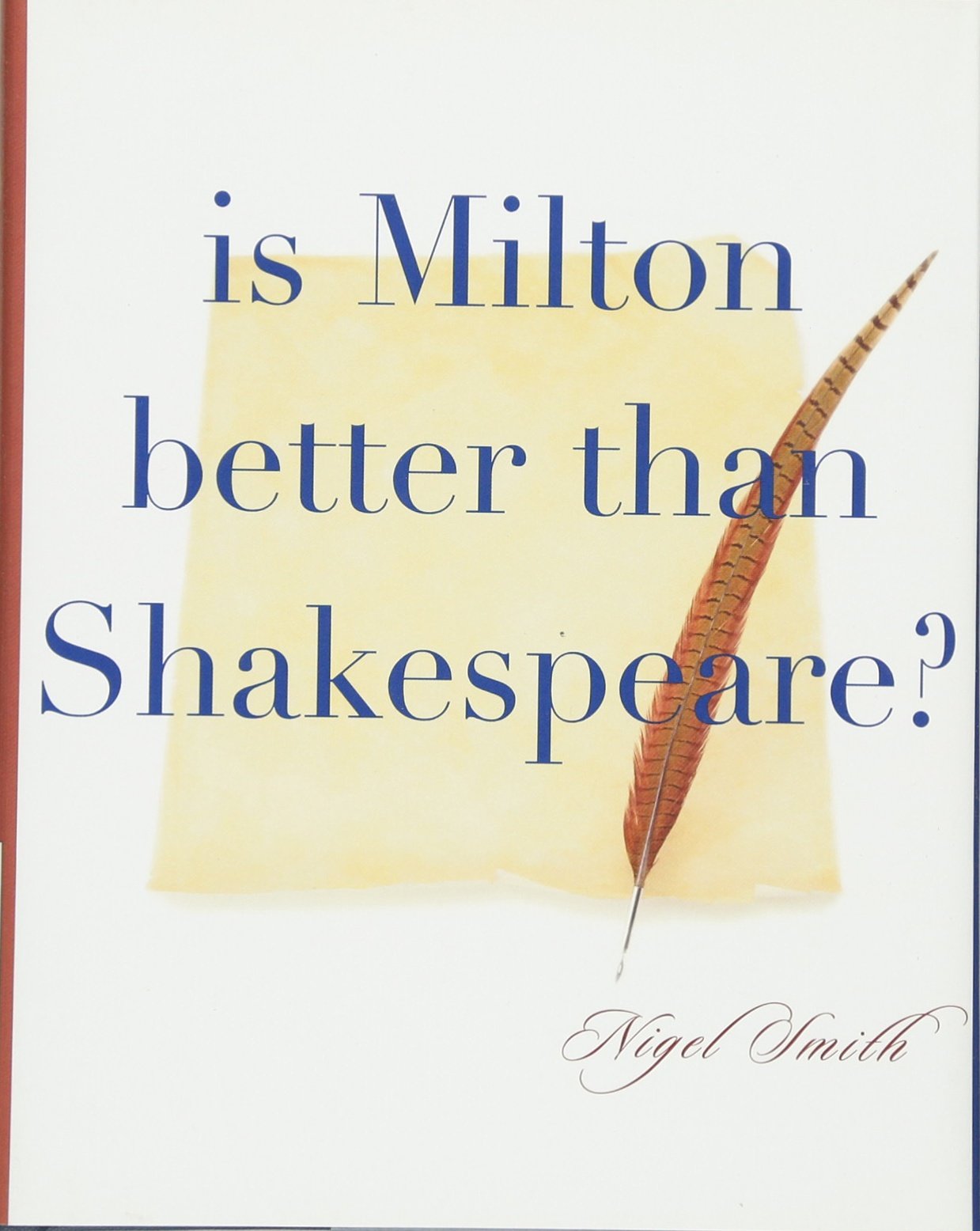
With literature waning in the interest of so many, is Shakespeare the only poet the public can still appreciate? John Milton, as this book makes clear, speaks more powerfully to the eternal questions and to the important concerns of our time. The Milton of this volume is an author for all Americans―conservative, liberal, radical―not only because he was a favorite of the founding fathers, his voice echoing through their texts and our very foundation, but also because his visionary writing embodies the aspirations that have guided Americans seeking ideals of ethical and spiritual perfection. Nigel Smith makes a compelling case for Milton’s relevance to our present situation. In direct and accessible terms, he shows how the seventeenth-century poet, while working to write the greatest heroic poem in the English language, also managed to theorize about religious, political, and civil liberty in ways that matter as much today as they did in Puritanical times. Through concise chapters that chart Milton’s life at the center of the English and European literary and political scenes―as well as his key themes of free will, freedom and slavery, love and sexual liberty, the meaning of creation, and the nature of knowledge―Smith’s work brings Milton, his poetry, and his prose home to readers of our day. A provocative and enlightening introduction, for newcomers and informed readers alike, this book rediscovers and redefines Milton for a new generation, one that especially needs and deserves to know him. The title is an attention-getting device. This isn’t a comparison of the two Renaissance colossi of English literature. It’s an explication of Milton on liberty, which Smith holds influenced modern notions of individuality and independence, especially through America’s Founding Fathers, whose prose, Smith says, is essentially Miltonic. Drawing on all the major prose as well as the poems, Smith highlights such Miltonic notions as the creativity of divorce, the absolute freedom of the press, the ineluctable viciousness of monarchy, the republic of virtue (which rather uncomfortably recalls Plato’s regime of philosopher-kings), and the division of creational responsibility within the Trinity. Finally, Smith asserts that, beautiful as Milton’s expression is (and close appreciation of many great passages of his poetry and prose is the most satisfying aspect of the book), his writings don’t contain a coherent structure of thought. Milton is consistent only in “inviting difference and dissent.” Perhaps that is why our perpetually rebellious pop culture compulsively references Milton, especially his Satan in Paradise Lost. An inquiry as fascinating as it is demanding. --Ray Olson “The title is silly but it is fair to say that the book is not… Smith is moved by the allegorical quest in Areopagitica for the lost body of Truth, by Milton’s exalted notions of the purpose of true poetry, and by the identification of the heroic poet as ‘national redeemer.’” ― Frank Kermode , New York Review of Books “This engagingly informal but thoroughly informed volume answers the title’s question in the affirmative: Milton is better for Americans today in that he stands for political liberty… This book deserves the attention of a broad audience.” ― E. D. Hill , Choice “ Is Milton Better than Shakespeare? offers a fresh, accessible, and beautifully written introduction to the major achievements of the greatest seventeenth-century poet. Bringing a wealth of insight and original learning to his subject, Nigel Smith successfully makes the case that the endeavor of reading Milton is not merely interesting, but actually relevant, and perhaps even urgent.” ― John Rogers, author of The Matter of Revolution: Science, Poetry, and Politics in the Age of Milton “ Is Milton Better than Shakespeare? asks a fundamental question that, like all such questions, is hard to answer but richly rewarding to consider. This is a lively, fast-paced and engaging book relating Milton to the political events and struggles of his day.” ― Gordon Teskey, author of Delirious Milton Nigel Smith is Professor of English at Princeton University and editor of The Poems of Andrew Marvell in the Longman Annotated English Poets Series.
More Information
| Gtin | 09780674028326 |
| Mpn | New-Nov09usbook-2017-c018461 |
| Age_group | ADULT |
| Condition | NEW |
| Gender | UNISEX |
| Material | Cellulose-based Or Similar Non-woven Material |
| Product_category | Gl_book |
| Google_product_category | Media > Books |
| Product_type | Books > Subjects > Literature & Fiction > History & Criticism > Regional & Cultural > European > British & Irish |