
Description
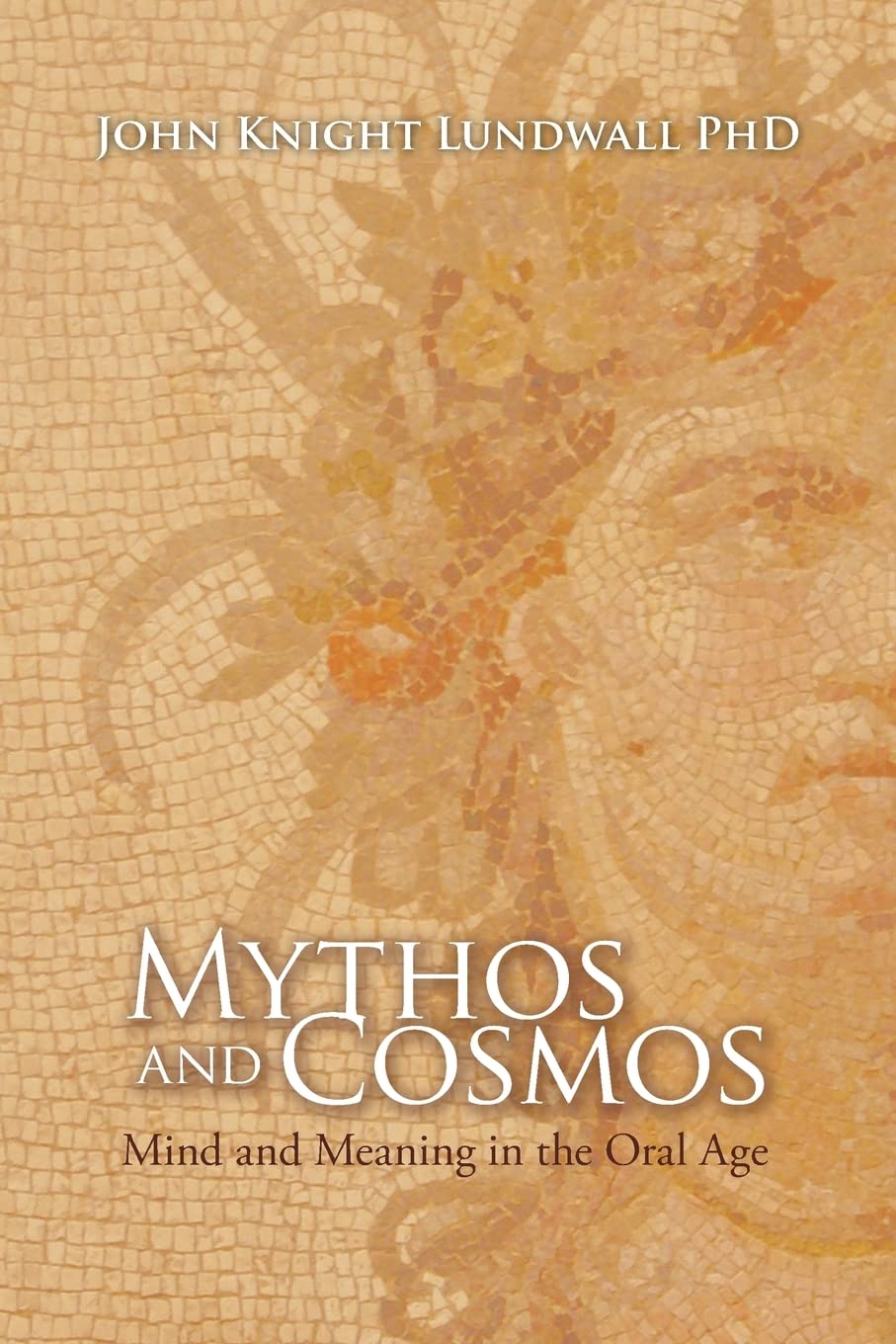
A bold new approach to myth studies, Mythos and Cosmos reexamines ancient myth through the template of oral thinking and oral cosmology. Contradicting decades of assumptions about the purpose and function of ancient mythology, Lundwall defines myth as "the oral imprinting press of pre-literate peoples" and shows that myth belongs to a complex and rational method of information transmission amongst oral peoples. Further, ancient mythology belonged to a cultus which incorporated ritual and symbol in a cosmological system which sought to found the sacred world.Where this work really shines is in its discussion of how ancient oral peoples saw their universe. Oral cosmology is far more complex than the simple "flat-earth" models discussed in current textbooks. Such myth cycles as the Epic of Gilgamesh, the Labors of Heracles, and the story of the Great Flood are seen completely differently when viewed from within ancient cosmological thought. Many strange features of ancient culture, such as the dancing chorus in Greek theater, are explained in rational and revolutionary ways. The pyramids, ziggurats, and megalithic-henges are also seen in a new light.While academic, the book is written for a general audience. It is a fascinating exploration in ancient history, comparative myth and religious studies, and the ancient mind. Rather than attempt to explain everything from the beginning of time, the author’s aim is thoughtfully defined: “This book is an attempt to create a historical context through which one may consider ancient constructs embedded in myth, ritual, and culture.” And while the author focuses on the Near East and Mediterranean, which are relatively rich with written records, he gives much weight to the vast amount of human history that preceded, or co-existed with, the art of writing. “My purpose is to show that what looks so strange to us about the ?past really derives from specific circumstances in which ancient peoples lived and which we have forgotten: the nature of orality and its epistemological consequences . . . and the nature of oral cosmology and how such people viewed the world and their place in it.” In “Mythos and Cosmos: Mind and Meaning in the Oral Age,” author John Knight Lundwall, (Ph.D., Comparative Myth and Religious Studies, Editor in Chief, Cosmos and Logos: Journal of Myth, Religion, and Folklore.) successfully presents a broad spectrum of facts, analysis, and creative concepts on a subject of great interest and relevance. The book covers the history of myth and ancient scientific record, the intertwined richness of both written and oral human accounts since antiquity, the history of human observations and ideas about cosmology and celestial bodies, the impact of cosmology on ritual and cult practices, and a most detailed discussion of three central myth cycles: the Epic of Gilgamesh, the Labors of Heracles, and selected Old Testament stories. In summary, “Mythos and Cosmos: Mind and Meaning in the Oral Age” by John Knight Lundwall, Ph.D. is truly a magnificent work of research and presentation that will be devoured by those interested in myth, religion, philosophy and human history. The structure of the book is logical and helpful, the facts and historical findings are presented in an accessible, interesting manner, and conflicting approaches are described with fairness and considerate thoroughness. While this book meets high academic standards of meticulousness and objectivity, it is highly readable, easily understood, and offers novel ideas and fresh concepts that are thought provoking, remarkably stimulating, and intellectually memorable. Highly recommended! —Columbia Review There are some philosophical and 'new age' books intended for the general-interest reader that are suitable for skimming and easy reflection; and then there are writings such as MYTHOS And COSMOS: Mind and Meaning in the Oral Age which are directed to those interested in more of a historical, analytical approach. Designed to challenge popular thinking rather than placate the unexamined mind, MYTHOS And COSMOS makes an unusual case for the early intellectual prowess of ancient man. MYTHOS And COSMOS represents the work of a scholar with a life-long commitment to examining ancient myth more closely. He completed his doctorate in comparative myth studies; then applied it to his continuing education. Jungian psychology, he maintains, lends a more accurate thought; that "...our conception of history is often the product of the ego" - and with this in mind, he selects and tackles points in history that have remained incongruous over the centuries. From what constitutes a 'literate person' and his observations, recordings and psyche to the evolution of cosmological thinking, how narratives often cross the boundary from historical fact into mythos, and how knowledge is fragmented and distorted over time, MYTHOS And COSMOS surveys a range of evidence - written, oral, and artifacts alike - to reveal the assump
More Information
| Gtin | 09780692505786 |
| Mpn | RKC2010811218 |
| Age_group | ADULT |
| Condition | NEW |
| Gender | UNISEX |
| Product_category | Gl_book |
| Google_product_category | Media > Books |
| Product_type | Books > Subjects > History > Ancient Civilizations |