
Description
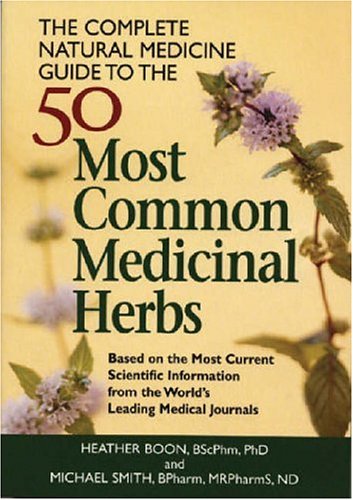
The most current scientific information from the world's leading medical journals. Although there is growing consumer awareness of alternative and complementary medicine, there is a lack of comprehensive information available on herbal products. While pharmacists, physicians and other health care professionals sometimes offer advice, their patients want more information. The Complete Natural Medicine Guide to the 50 Most Common Medicinal Herbs is a comprehensive, fully-illustrated reference to the 50 most commonly prescribed herbs. A complete description of each herb is featured along with its other common names, possible adverse effects, therapeutic uses for treating illness and disease as well as potential drug interactions. Some of the herbs included are: Aloe Vera - Evening Primrose - Goldenseal - Scullcap - Burdock - Tumeric - Tea Tree Oil - Meadowsweet This guide is written by professional pharmacists, one a naturopathic doctor, using the most current research and clinical testing. The authors' easy-to-understand text, combined with the latest findings and clear directions for safe dosages, makes this practical reference on medicinal herbs a primary resource of data. A layman's guide to using herbs safely. ( Appleton Post-Crescent 2004-04-27) The text is well written and will be easily understood by the lay reader as well as the health professional. It would be a good addition to the reference shelf of any library needing to provide information on medicinal herbs. (Leslie Behm American Reference Books Annual, Volume 36 ) A compilation of well-written and easily understandable reviews of herbal medicines... highly recommended for public and academic libraries. (Beth Thomsett-Scott E-Streams ) Considering the growing number of people who are using alternative medicine as an answer to the difficulty in obtaining health care, this easy to read, well-organized book is a blessing for the patient or practitioner trying to understand the appropriate use of common medicinal herbs... this great book supplies useful information about fifty of the most common medicinal herbs... should be on every practicing physician's desk. (Carl C. Bell, MD Journal of the Natural Medicine Association ) Finally I have found a book on herbal medicine that I can recommend wholeheartedly... one of the best books on the subject to date. The evidence summarized here is objective rather than promotional, and key statements are fully referenced rather than opinion based. (Dr. Edzard Ernst Focus on Alternative and Complementary Therapies ) Pharmacists team up to define not only what the most common medicinal herbs are but also what they are not. ( Science News 2004-03-06) Dr. Heather Boon, BScPhm, PhD , is a licensed pharmacist, and an assistant professor at the Faculty of Pharmacy, University of Toronto. She has held a Medical Research Council of Canada post-doctoral fellowship at the Centre for Studies in Family Medicine at the University of Western Ontario. Dr. Michael Smith, BPharm, MRPharmS, ND , is a licensed pharmacist, a naturopathic doctor, and Head of Botanical Sciences at the Canadian College of Naturopathic Medicine. He is a Senior Adviser at the prestigious Natural Health Products Directorate of Health Canada, which is responsible for investigating and certifying the medical efficacy and safety of herbs. Foreword Everyone involved in the delivery of health-care is now aware of the increased interest in complementary and alternative medicine (CAM), especially herbal or botanical medicine. According to several recent North American surveys, a growing number of people are using some form of complementary or alternative medicine, 15-25% of the population in Canada, for example, which is comparable to a much-quoted New England Journal of Medicine report that 34% of American survey respondents had used at least one unconventional therapy in the past year. Significantly, only one-third of these people reported seeing a complementary healthcare provider, indicating a high level of self-medication. Botanical or herbal medicine is becoming big business for pharmacists A "Trends Report" in Pharmacy Post indicated that three out of every four Canadian community pharmacies now sell herbal and/or homeopathic products and that approximately half of those surveyed intended to increase these sections. Another report suggests that the average "medium sized" community pharmacy in Canada sells at least 35 plant-derived products (including natural source vitamins), marketed by at least 8 phyto-pharmaceutical manufacturers. In addition, Pharmacy Practice reported that Canadians spent $175 million on herbal products in 1996, which is an increase from the $150 million spent in 1995. Similar trends prevail in the United States. The popularity of herbal medicine continues to grow day-by-day. Although some see botanical medicine as a new "niche" for pharmacy, the debate about whether botanical medicine belongs in pharmacies
More Information
| Gtin | 09780778800811 |
| Age_group | ADULT |
| Condition | NEW |
| Gender | UNISEX |
| Product_category | Gl_book |
| Google_product_category | Media > Books |
| Product_type | Books > Subjects > Health, Fitness & Dieting > Alternative Medicine > Herbal Remedies |