
Description
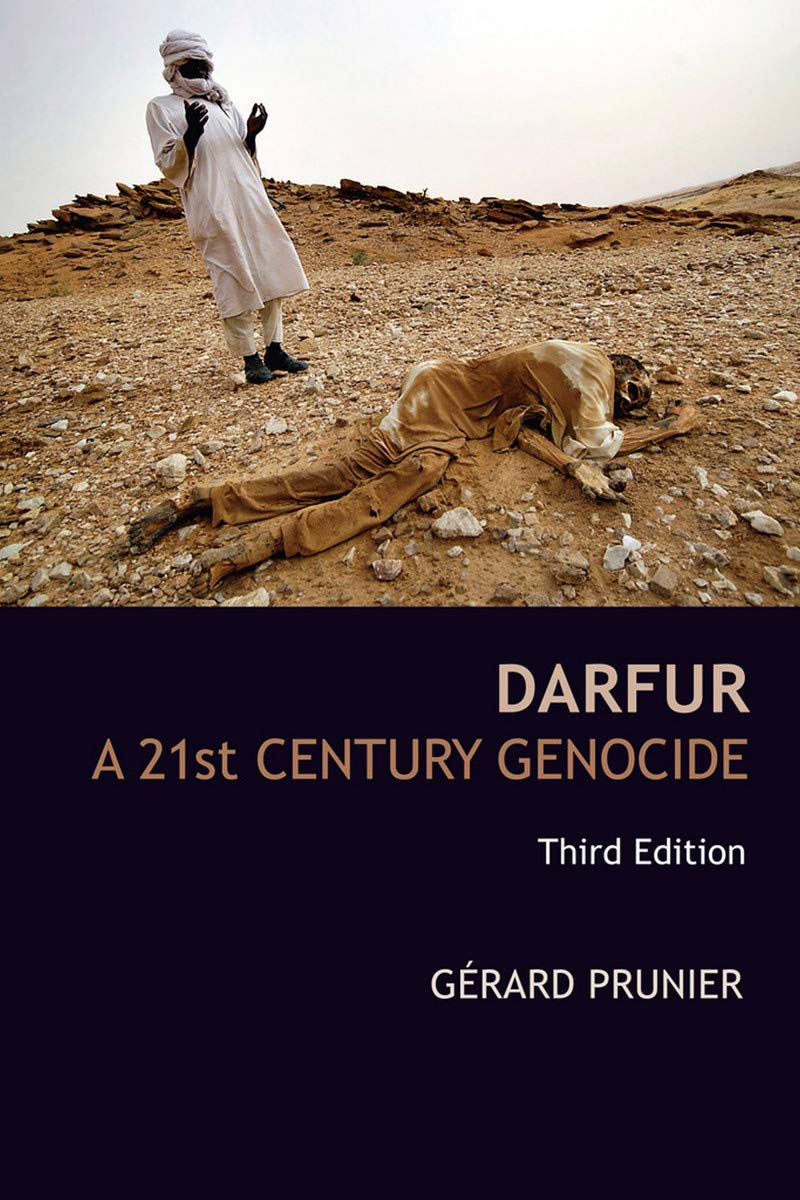
In mid-2004 the Darfur crisis in Western Sudan forced itself onto the center stage of world affairs. Arab Janjaweed militias, who support the Khartoum government, have engaged in a campaign of violence against the residents of Western Sudan. A formerly obscure tribal conflict in the heart of Africa has escalated into the first genocide of the twenty-first century. In sharp contrast to official reaction to the Rwandan massacres, U.S. Secretary of State Colin Powell called the situation in Darfur a genocide in September 2004. Its characteristics Arabism, Islamism, famine as a weapon of war, mass rape, international obfuscation, and a refusal to look evil squarely in the face reflect many of the problems of the global South in general and of Africa in particular. Journalistic explanations of the unfolding humanitarian catastrophe have been given to hurried generalizations and inaccuracies: the genocide has been portrayed as an ethnic clash marked by Arab-on-African violence, with the Janjaweed militias under strict government control, but neither of these impressions is strictly true. Darfur: The Ambiguous Genocide explains what lies behind the conflict, how it came about, why it should not be oversimplified, and why it is so relevant to the future of the continent. G rard Prunier sets out the ethnopolitical makeup of the Sudan and explains why the Darfur rebellion is regarded as a key threat to Arab power in the country much more so than secessionism in the Christian South. This, he argues, accounts for the government s deployment of exemplary violence by the Janjaweed militias in order to intimidate other African Muslims into subservience. As the world watches, governments decide if, when, and how to intervene, and international organizations struggle to distribute aid, the knowledge in Prunier's book will provide crucial assistance. "A passionate and highly readable account of the current tragedy that combines intimate knowledge of the region's history, politics, and sociology with a telling cynicism about the polite but ineffectual diplomatic efforts to end it. It is the best account available of the Darfur crisis." --Foreign Affairs, November/December 2005 "Does the conflict in Darfur, however bloody, qualify as genocide? Or does the application of the word 'genocide' to Darfur make it harder to understand this conflict in its awful peculiarity? Is it possible that applying a generic label to Darfurian violence makes the task of stopping it harder? Or is questioning the label simply insensitive, implying that whatever has happened in Darfur isn't horrible enough to justify a claim on the world's conscience, and thus invite inaction or even the dismissal of Darfur altogether? These questions--and the paradoxical nature of the G-word--lie at the heart of a much-needed new book by Gerard Prunier, a scholar of African affairs. In Darfur: The Ambiguous Genocide, Prunier, a professor at the University of Paris, casts aside labels and lays bare the anatomy of the Darfur crisis, drawing on a mixture of history and journalism to produce the most important book of the year on any African subject." --G. Pascal Zachary, Salon.com "During 2003, occasional reports emerged in the international media of fighting in Darfur, a huge tract of western Sudan bordering Chad. Over the next year the picture became confused, as--depending on who was doing the talking--a minor rebellion became a tribal spat, or nomads taking on farmers, or Arab-versus-African ethnic cleansing, or genocide. An outside world that understood political violence in Sudan through the simplistic lens of the unending war between Muslim north and Christian/animist south--a war that seemed to be about to end--had to adjust. And nothing that has emerged since has made that adjustment easy. If Darfuris are Muslim, what is their quarrel with the Islamic government in Khartoum? If they and the janjaweed--'evil horsemen'--driving them from their homes are both black, how can it be Arab versus African? If the Sudanese government is making peace with the south, why would it be risking that by waging war in the west? Above all, is it genocide? Gérard Prunier has the answers. An ethnographer and renowned Africa analyst, he turns on the evasions of Khartoum the uncompromising eye that dissected Hutu power excuses for the Rwanda genocide a decade ago." --Dominick Donald, The Guardian, 10 September 2005 "Gérard Prunier, a professor at the University of Paris, has performed an unusual feat: He has managed to produce the earliest book-length analyses of two African genocides. Just one year after the 1994 genocide in Rwanda, Prunier published The Rwanda Crisis; now, ten years later, while Africa is experiencing yet another genocide, Prunier is again the first out of the gate with his analysis. The fact that the book is being published while the genocide is still going on speaks volumes about the international community's ability and willingness to effectively deal w
More Information
| Gtin | 09780801475030 |
| Mpn | Black & White Tables, Maps |
| Age_group | ADULT |
| Condition | NEW |
| Gender | UNISEX |
| Product_category | Gl_book |
| Google_product_category | Media > Books |
| Product_type | Books > Subjects > Politics & Social Sciences > Politics & Government > International & World Politics > African |