
Description
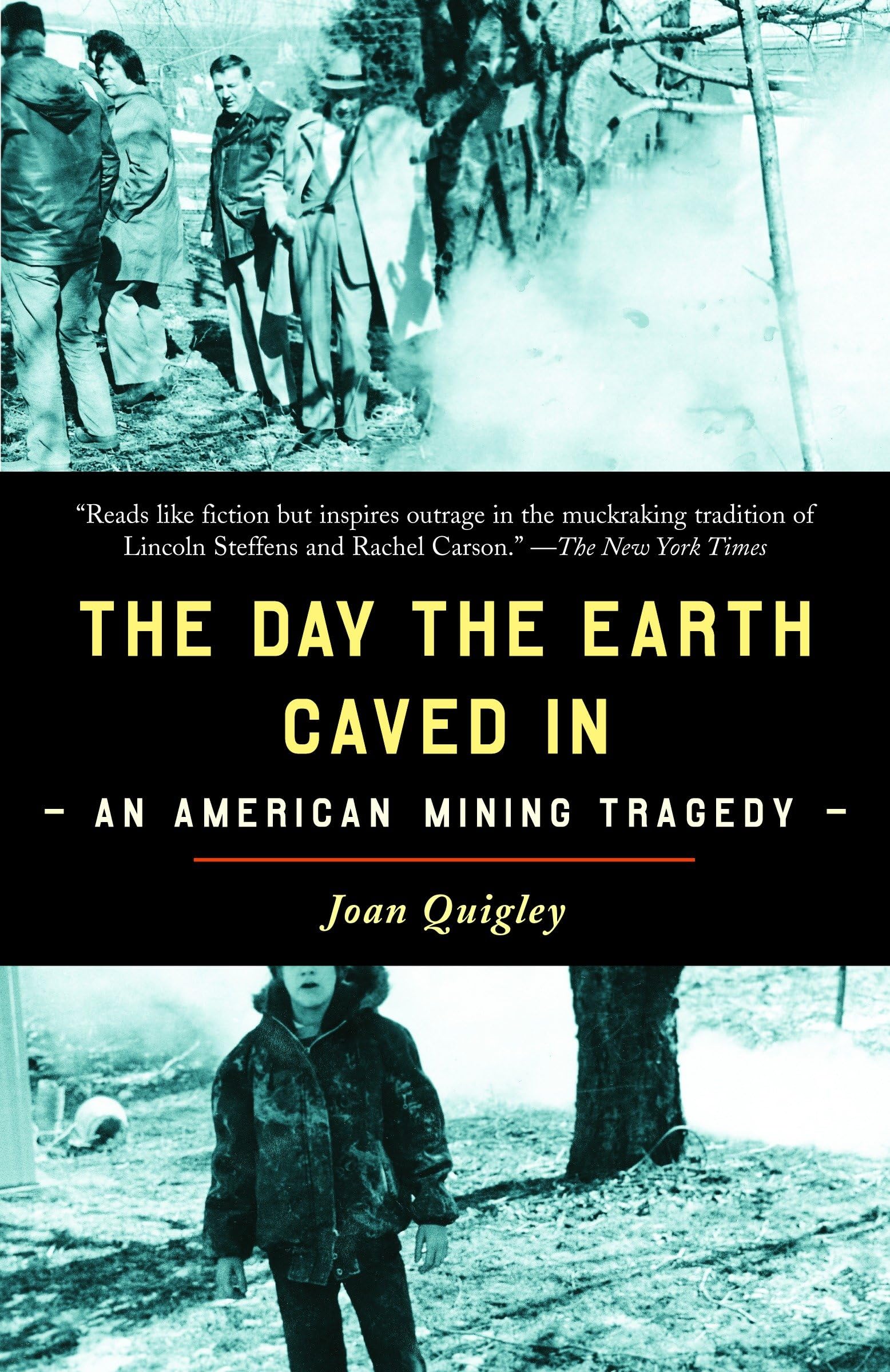
Beginning on Valentine’s Day, 1981, when twelve-year-old Todd Domboski plunged through the earth in his grandmother’s backyard in Centralia, Pennsylvania, The Day the Earth Caved In is an unprecedented and riveting account of the nation’s worst mine fire. In astonishing detail, award-winning journalist Joan Quigley, the granddaughter of Centralia miners, ushers readers into the dramatic world of the underground blaze. Drawing on interviews with key participants and exclusive new research, Quigley paints unforgettable portraits of Centralia and its residents, from Tom Larkin, the short-order cook and ex-hippie who rallied the activists, to Helen Womer, the bank teller who galvanized the opposition, denying the fire’s existence even as toxic fumes invaded her home. Like Jonathan Harr’s A Civil Action, The Day the Earth Caved In is a seminal investigation of individual rights, corporate privilege, and governmental indifference to the powerless. “Reads like fiction but inspires outrage in the muckraking tradition of Lincoln Steffens and Rachel Carson.”— New York Times “A real-life epic of brutally indifferent government, greedy corporations, and the unlikely heroes. You’ll feel enraged to know the truth of what happened in our mountains and proud of your fellow Americans who took on Goliath.”—John Passacantando, executive director, Greenpeace USA “A thorough and often passionate account . . . The Day the Earth Caved In shines.”— Washington Post Book World “Fascinating . . . [an] excellent study.”— Denver Post “First-rate research and journalism.”— Kirkus Reviews , starred review “It is quite a story.”— Wall Street Journal “ Quigley’s riveting account of the nation’s most devastating mine fire will change the way you think about so-called natural disasters, and the emotions we attach to the places we call home. This is an extraordinary book.” —Sean Wilentz, author of The Rise of American Democracy “If you can imagine a book that combines the gritty dignity of How Green Was My Valley with the muckraking of Silent Spring , then you have some sense of this deeply affecting work.”—Samuel G. Freedman, author of Upon This Rock “Joan Quigley, the granddaughter of coal miners, has combined meticulous reporting and personal passion to bring us this important book — one that illuminates an underground blaze that many corporate and government officials sought to smother and conceal.” —Gay Talese, author of A Writer’s Life “Quigley takes this complex story involving politics, science and history and weaves it into something that informs and entertains.”— Lexington Herald-Leader Joan Quigley first glimpsed the Centralia mine fire at age fifteen, during her grandmother’s funeral at St. Ignatius Cemetery. A former Miami Herald business reporter, she is a graduate of Princeton and of Columbia University’s Graduate School of Journalism. She is a recipient of the J. Anthony Lukas Work-in-Progress Award for this book. CHAPTER ONE Powder Keg Mary Lou Gaughan grabbed some Windex and paper towels and stepped onto her front porch. Overhead, beyond her red and white aluminum awning, the sun shone down on Wood Street, bathing her neighbors’ row homes in late-spring warmth. Summer, at long last, beckoned. Across town, similar routines unfolded, especially among neighbors who, like her, tackled chores left unfinished from Easter week: a litany of tasks inherited from immigrant mothers and grandmothers. Mattresses had to be flipped, linoleum polished, spring curtains hung. Outside, winter grime had to be wiped from front doors, a shine buffed onto parlor windows, and sidewalks swept free of leaves. Years earlier, when collieries spewed coal dust across the borough and women waged an almost daily battle against black silt, these tasks sprang from practicality and pride, cued, like the Resurrection, to the promise of rebirth. Now, with three days remaining until May 30 and scores of residents slated to converge on the borough for Memorial Day 1962, those who remained honored tradition and burnished appearances, unfurling American flags and draping them from porch railings and banisters. For many, a separate ritual awaited in the borough’s cemeteries, one for each religious denomination: Catholic, Protestant, Greek Catholic, and Russian Orthodox. In front of ancestral graves, they planted rows of red geraniums or purple, white, and pink petunias. Others tendered bouquets of yellow or red roses or, for the Irish, a wicker basket of green carnations. Still others tended to landscaping like groundskeepers, plucking weeds and mowing strips of grass the size of twin mattresses. Even before the mines closed, few Centralians risked the stigma of an untended family plot. Back on Wood Street, Mary Lou, a thirty-four-year-old garment worker with fair skin, pale blue eyes, and short curly brown hair, leaned into the concrete porch of her ranch-style house, coaxing a gleam from her three side-by-side parlor windows
More Information
| Color | Multicolor |
| Gtin | 09780812971309 |
| Mpn | 8 PP Photo Section |
| Age_group | ADULT |
| Condition | NEW |
| Gender | UNISEX |
| Product_category | Gl_book |
| Google_product_category | Media > Books |
| Product_type | Books > Subjects > History > Americas > United States > State & Local |