
Description
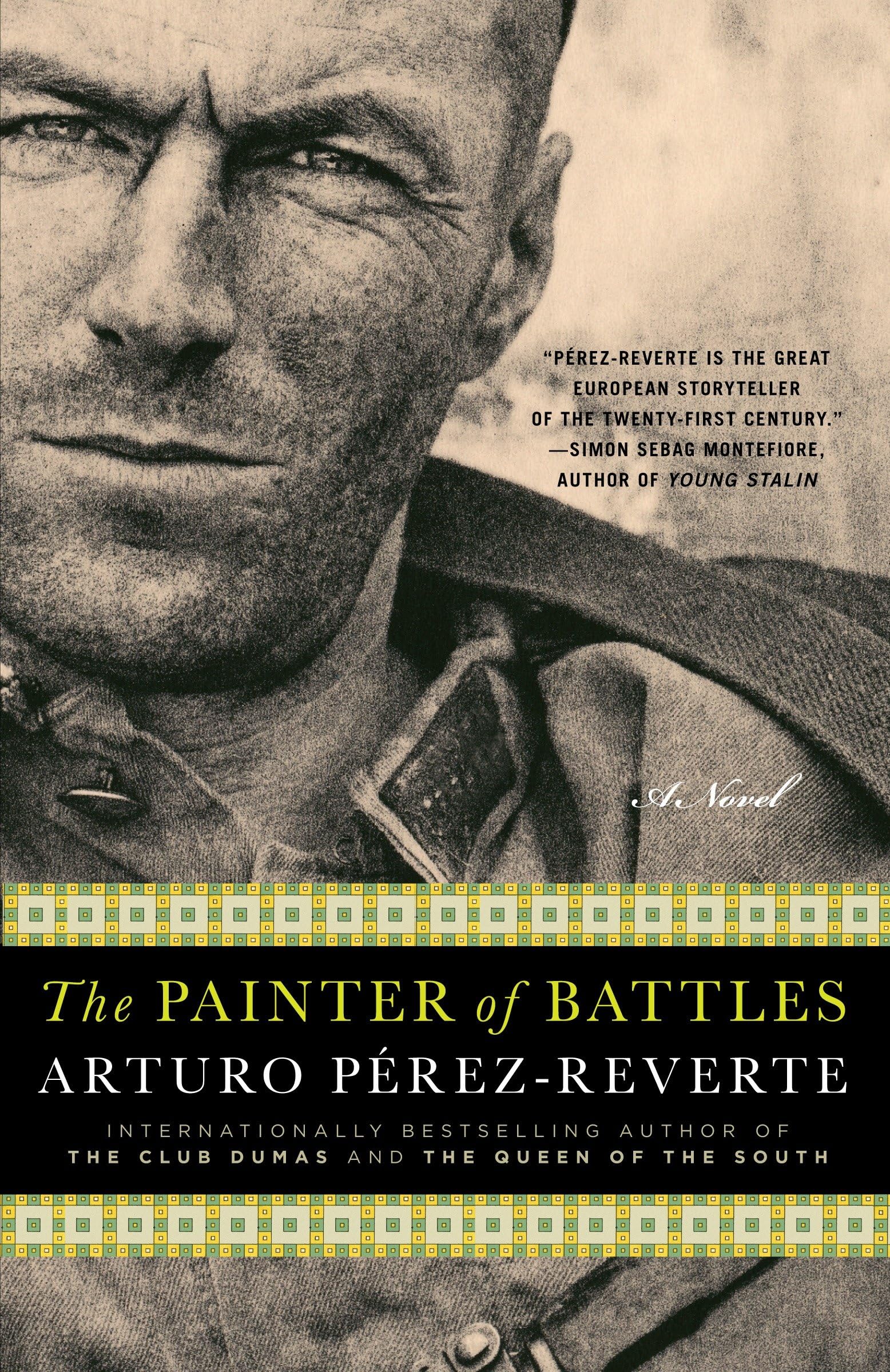
Andrés Faulques, a world-renowned war photographer, has retreated to a tower overlooking the Spanish coast, where he paints a vast mural incorporating the indelible images of conflict he’s witnessed in his lifetime. One night, an unexpected visitor interrupts his solitude. As Faulques struggles to recall the face, the man explains that he was the subject of an iconic photo taken by Faulques in a war zone years ago–a photo that destroyed his life. “And why have you come looking for me?” asks Faulques. The stranger answers, “Because I’m going to kill you.” So begins a life-or-death exchange in which Faulques is forced to recall a time when he loved a beautiful woman and risked his life daily for art and testimony. Yet as the tense dialogue between Faulques and his would-be killer continues, the stakes grow even higher. What they are grappling with becomes not just Faulques’ fate, but the very nature of love and cruelty itself. “[Pérez-Reverte’s] best book yet . . . a game of mental chess, an excursion into art, history and imagination.” – The Times (London) “A remarkable achievement. Not only does the clash of ideas and emotions echo after you have turned the last page–this novel will change what you see in images from datelines around the world.” – Scott Simon, author of Pretty Birds “Arturo Pérez-Reverte has established himself as the master of the intellectual thriller.” –Chicago Tribune “[A] taut literary thriller [with] meticulous detail and dark, brooding tone.” –Publishers Weekly “A gripping story of war, cruelty, testimony, and the past . . . Arturo Pérez-Reverte is the great European storyteller of the 21st century.” –Simon Sebag Montefiore, author of Young Stalin “Reminds American readers of the sublime rhetoric of Faulkner and how such passages in the hands of a master can add to the momentum of the story.” –San Francisco Chronicle “A tour de force [that] explores the great themes of human existence.” –The Australian Arturo Pérez-Reverte’s bestselling books, including The Club Dumas, The Flanders Panel, The Fencing Master , and the Captain Alatriste series, have been translated into thirty-four languages in fifty countries and have sold millions of copies. Born in Cartagena, Spain, Pérez-Reverte now lives in Madrid, where he was recently elected to the Spanish Royal Academy. A former war journalist, he covered conflicts in Angola, Bosnia, Croatia, El Salvador, Lebanon, Nicaragua, the Persian Gulf, and Sudan, among others. He now writes fiction full time. 1. He swam one hundred and fifty strokes out to sea and the same number back, as he did each morning, until he felt the round pebbles of the shore beneath his feet. He dried himself, using the towel he’d hung on a tree trunk that had been swept in by the sea, put on his shirt and sneakers, and went up the narrow path leading from the cove to the watchtower. There he made coffee and began, mixing blues and grays that would lend his work the proper atmosphere. During the night—each night he slept less and less, and that only a restless dozing—he had decided that cold tones would be needed to delineate the melancholy line of the horizon, where a veiled light outlined the silhouettes of warriors walking beside the sea. Those tones would envelop them in reflections from the waves washing onto the beach that he had spent four days creating with light touches of Titian white, applied pure. So in a glass jar he mixed white, blue, and a minimal amount of natural sienna, until they were transformed into a luminous blue. Then he daubed some of the paint on the oven tray he used as a palette, dirtied the mixture with a little yellow, and worked without stopping the rest of the morning. Finally he clamped the handle of the brush between his teeth and stepped back to judge the effect. Sky and sea were now harmoniously combined in the mural that circled the interior of the tower, and although there was still a lot to be done, the horizon was now a smooth, slightly hazy line that accentuated the loneliness of the men—dark strokes splashed with metallic sparks—dispersed and moving away beneath the rain. He rinsed the brushes with soap and water and set them to dry. From the foot of the cliff below came the sound of the motors and music of the tourist boat that ran along the coast every day at the same hour. With no need to look, Andrés Faulques knew that it was one o’clock. He heard the usual woman’s voice, amplified by the loudspeaker system, and it seemed even stronger and clearer when the boat drew even with the inlet, for then the sound reached the tower with no obstacle other than the few pines and bushes that despite erosion and slides were still clinging to the cliff face. This place is known as Cala del Arráez. It was once the refuge of Berber pirates. Up there on the top of the cliff you can see an old watchtower that was constructed at the beginning of the eighteenth century as a part of the coastal defense, with the specific pu
More Information
| Color | Multicolor |
| Gtin | 09780812977301 |
| Mpn | 9780812977301 |
| Age_group | ADULT |
| Condition | NEW |
| Gender | UNISEX |
| Product_category | Gl_book |
| Google_product_category | Media > Books |
| Product_type | Books > Subjects > Literature & Fiction > Genre Fiction > War |