
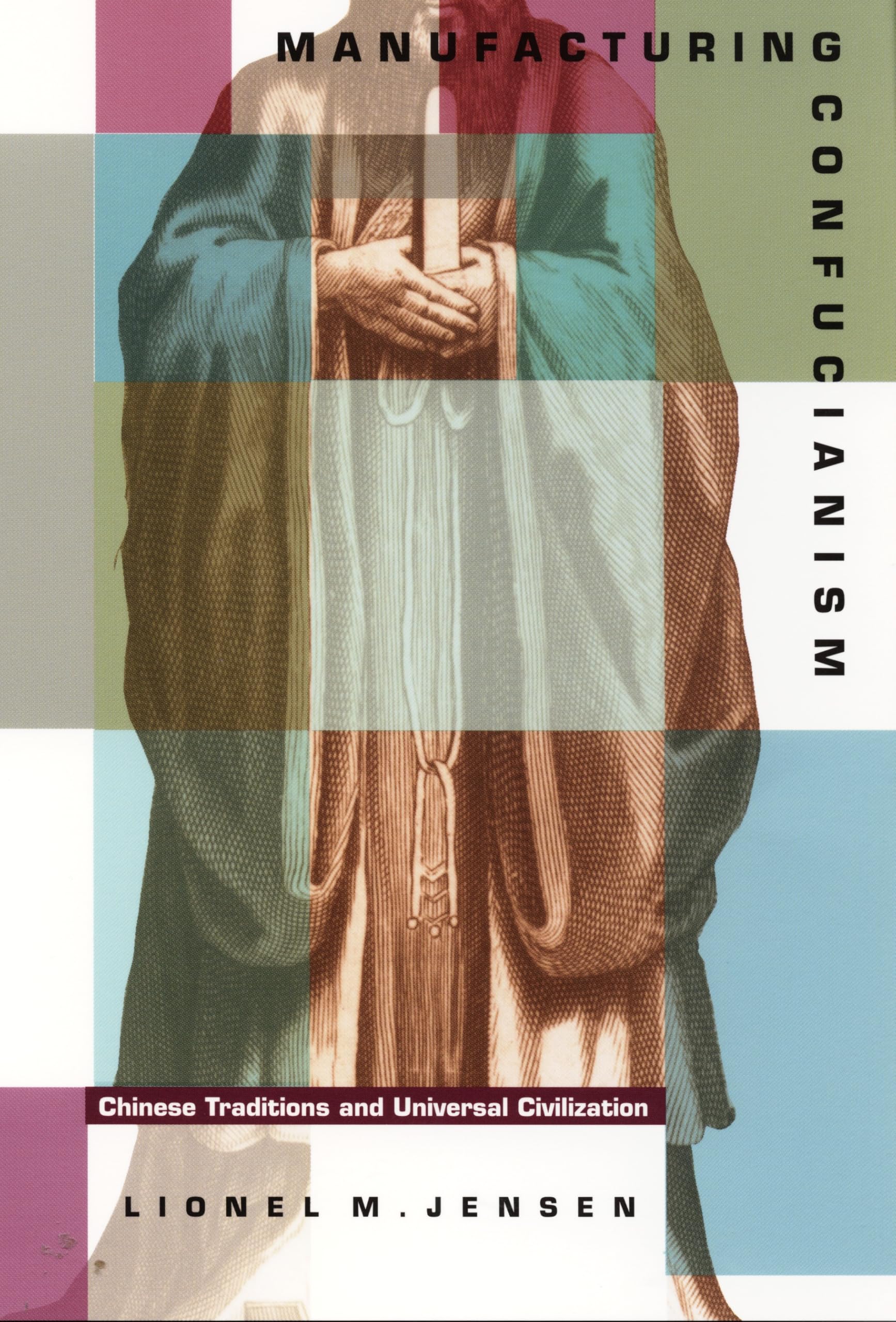
Description
Could it be that the familiar and beloved figure of Confucius was invented by Jesuit priests? In Manufacturing Confucianism , Lionel M. Jensen reveals this very fact, demonstrating how sixteenth- and seventeenth-century Western missionaries used translations of the ancient ru tradition to invent the presumably historical figure who has since been globally celebrated as philosopher, prophet, statesman, wise man, and saint. Tracing the history of the Jesuits’ invention of Confucius and of themselves as native defenders of Confucius’s teaching, Jensen reconstructs the cultural consequences of the encounter between the West and China. For the West, a principal outcome of this encounter was the reconciliation of empirical investigation and theology on the eve of the scientific revolution. Jensen also explains how Chinese intellectuals in the early twentieth century fashioned a new cosmopolitan Chinese culture through reliance on the Jesuits’ Confucius and Confucianism. Challenging both previous scholarship and widespread belief, Jensen uses European letters and memoirs, Christian histories and catechisms written in Chinese, translations and commentaries on the Sishu , and a Latin summary of Chinese culture known as the Confucius Sinarum Philosophus to argue that the national self-consciousness of Europe and China was bred from a cultural ecumenism wherein both were equal contributors. “A thesis that will scandalize cultural purists: the ‘Confucius’ we love, honor and emulate springs from the intercultural trafficking of seventeenth-century Jesuit missionaries. Jensen argues his case on many planes, with nuance and bedrock affection for both China and sinology.”—Haun Saussy, Stanford University, and author of The Problem of a Chinese Aesthetic “Jensen makes his case with a forceful combination of detailed sinological research and rigorous reasoning. It is certain to be a focus of discussion for many decades to come. Indeed, it will be a significant milestone in the field.”—Hoyt Cleveland Tillman, Arizona State University, and author of Confucian Discourse and Chu Hsi’s Ascendancy "A thesis that will scandalize cultural purists: the 'Confucius' we love, honor and emulate springs from the intercultural trafficking of seventeenth-century Jesuit missionaries. Jensen argues his case on many planes, with nuance and bedrock affection for both China and sinology."--Haun Saussy, Stanford University, and author of "The Problem of a Chinese Aesthetic" Lionel M. Jensen is Assistant Professor of History and Director of the Program in Chinese Studies at the University of Colorado at Denver. Manufacturing Confucianism Chinese Traditions & Universal Civilization By Lionel M. Jensen Duke University Press Copyright © 1997 Duke University Press All rights reserved. ISBN: 978-0-8223-2034-0 Contents FIGURES, ACKNOWLEDGMENTS, NOTE, CHRONOLOGY, INTRODUCTION: CONFUCIUS, KONGZI, AND THE MODERN IMAGINATION, THE MAKING OF THE ICON CONFUCIUS, THE NATIVE RESTORATION OF KONGZI: COMMERCE AND FETISHISM, CONFUCIUS, CONFUCIANISM, AND THE POLITICS OF SCHOLARSHIP, RU: STORIED TRUTH AND SYMBOLIC PLASTICITY, IN DEFENSE OF A TITLE: THE MEANING OF "MANUFACTURE", PART ONE: THE MANUFACTURE OF CONFUCIUS AND CONFUCIANISM, CHAPTER 1: THE JESUITS, CONFUCIUS, AND THE CHINESE, CHAPTER 2: THERE AND BACK AGAIN: THE JESUITS AND THEIR TEXTS IN CHINA AND EUROPE, INTERLUDE: THE MEANING AND END OF CONFUCIANISM: A MEDITATION ON CONCEPTUAL DEPENDENCE, PART TWO: MAKING SENSE OF RU AND MAKING UP KONGZI, CHAPTER 3: ANCIENT TEXTS, MODERN NARRATIVES: NATIONALISM, ARCHAISM, AND THE REINVENTION OF RU, CHAPTER 4: PARTICULAR IS UNIVERSAL: HU SHI, RU, AND THE CHINESE TRANSCENDENCE OF NATIONALISM, EPILOGUE: AT CENTURY'S END—ECUMENICAL NATIVISM AND THE ECONOMY OF DELIGHT, GLOSSARY, NOTES, BIBLIOGRAPHY, INDEX, CHAPTER 1 THE JESUITS, CONFUCIUS, AND THE CHINESE "He [Cook] is a god." But then recognition is a kind of re-cognition: the event is inserted in a preexisting category, and history is present in current action. The irruption of Captain Cook from beyond the horizon was a truly unprecedented event, never seen before. But by thus encompassing the existentially unique in the conceptually familiar, the people embed their present in the past.— Marshall Sahlins In ancient times they followed the natural law as faithfully as in our lands; and for 1500 years this people was little given to idols, and those they adored were not such a wretched crowd as our Egyptians, Greeks and Romans adored, but a lot who were very virtuous and to whom were attributed very many good deeds. In fact, in the books of the literati which are the most ancient and of the greatest authority, they give no other adoration than to heaven and earth and the Lord of them. When we examine closely all these books we discover in them very few things contrary to the light of reason and very many in conformity with it.— Matteo Ricci By the time the It
More Information
| Gtin | 09780822320340 |
| Age_group | ADULT |
| Condition | NEW |
| Gender | UNISEX |
| Product_category | Gl_book |
| Google_product_category | Media > Books |
| Product_type | Books > Subjects > Religion & Spirituality > Christian Books & Bibles > Catholicism |