
Description
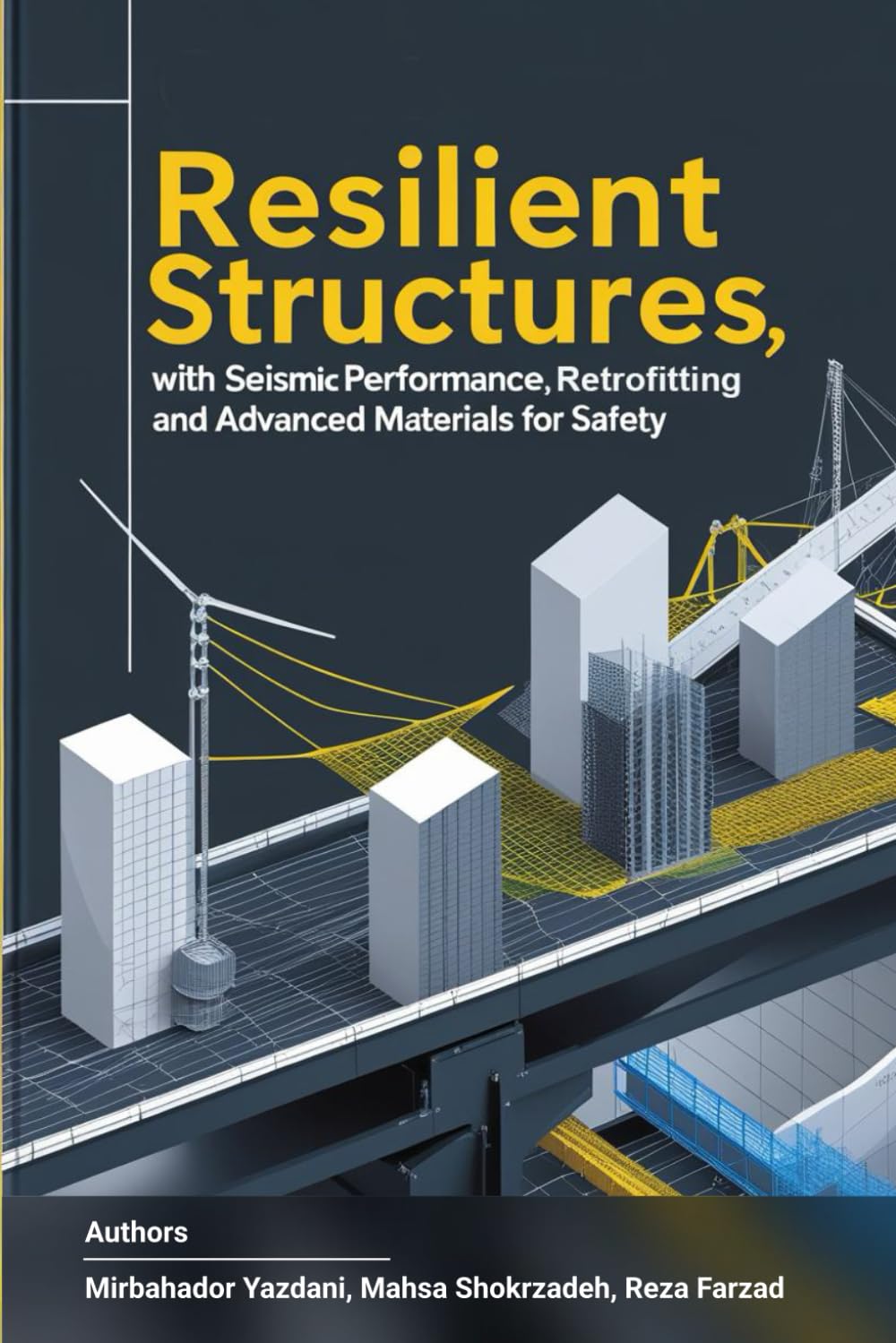
Offering a detailed account of resilient structures, this book emphasizes advanced retrofitting strategies specifically aimed at improving seismic performance, pioneering material uses, and overall protective retrofitting of structures. It considers the principles of structural resilience, the dynamics of structures under seismic loads, and the theories of vulnerability and damage tolerance and their quantitative assessments. The author traces the history of earthquake engineering, performance-based seismic design principles, and probabilistic risk assessment while explaining the modern engineering treatment of design for expected and outlier seismic activity, and the integration of extreme event engineering. The book also covers practical approaches to retrofitting structures, addressing in detail the various methods of retrofitting, including traditional methods and more recent approaches like base isolation, energy dissipation systems, and the tiered smart structures of the future. It discusses the advanced role of high-performance and ultra-high-performance concrete and novel materials like fiber-reinforced polymers, shape memory alloys, engineered cementitious composites, and even nanotechnology. The author presents state of the art material applications in both design and real-world applications. The book also covers design, verification, and optimization of retrofitted systems aided by nonlinear dynamic analysis and hybrid simulation, as well as full-scale testing aimed at innovative, reliable methods of a contemporary retrofitting techniques, and structural forms, in addition to experimental research. In-depth study of performance-based design principles includes multi-objective design strategies that balance safety, functionality, repairability, life-cycle costing, reliability, cost of ownership, sustainability, and eco-friendliness. Lessons learned, retrofitting, and structural health monitoring are discussed in the context of recent earthquakes case studies, bridging the gap between theory and practice. The last chapters discuss emerging trends in digitalization, Building Information Modeling (BIM), AI, ML, and adaptive self-sensing systems, and how these innovations are changing the landscape of seismic evaluation, real-time monitoring, and resilient infrastructure design. Integrating core concepts with practical instructions, new materials, and powerful computational resources, this book bridges the gap between design, analysis, evaluation, and retrofitting of structures to mitigate seismic risk, providing tools to improve safety, performance, and predictability of deterioration in in-ground and above-ground structures.
More Information
| Gtin | 09781069807571 |
| Age_group | ADULT |
| Condition | NEW |
| Gender | UNISEX |
| Product_category | Gl_book |
| Google_product_category | Media > Books |
| Product_type | Books > Subjects > Engineering & Transportation > Engineering > Civil & Environmental > Seismic Design |