
Description
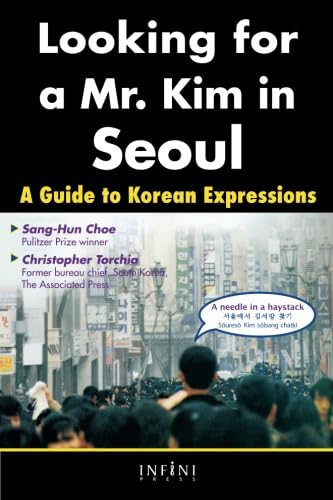
“Looking for a Mr. Kim in Seoul” has the same meaning as ’finding a needle in a haystack’ in English as Kim is one of the most popular family name in Korea. Expressions reflect the culture, and the history of its people. Even if you know the meaning of each word, you probably will not understand the entire expression without understanding the culture. Looking for a Mr. Kim in Seoul: A Guide to Korean Expressions makes enjoyable the discovery of the connection between its language and the Korean people and their history and culture. Many Korean expressions reflect the gritty side of Koreans, who have endured conflict and hardship throughout their history. There are also humorous expressions such as “I laughed so hard that I thought my belly button would pop out." Some expressions are vaguely familiar: "The other man's rice cake always looks bigger,” and "Packed like bean sprouts." Other expressions are very unique, after having a delicious meal, you may say, "You wouldn't notice even if your friend at the same table dies." When you are in a heated discussion, you may yell “You Die! I Die!” “Looking for a Mr. Kim in Seoul” is arranged by themes in 14 chapters, including anatomical terms, grit and hardship, money, proverbs as propaganda (North Korea) and family relationships. Each of the sayings is given in English, Korean and English transliteration. An English translation is followed with an extended explanation of the meaning, origin, as well as additional information such as variants and additional explanation. The book contains pronunciation guide, map of Korea, indices in English, Korean and some Hanja, Chinese characters used in Korea. "... All the funny expressions my Korean-speaking friends chuckle about, but seldom explain, are in here. Now I can finally understand!" -- --Martha Vickery, Korean Quarterly The book "Looking for a Mr. Kim in Seoul" is a welcome addition to the growing list of English language books on Korean culture. As a collection of Korean proverbs, it is an unique contribution to our understanding of Korean ethos and psyche. There may be similar publications in Korean but this is the first in English that I have come across. The selection and coverage of Korean "expressions" are comprehensive for a relatively small book. I am impressed by the number and the variety of topics that the authors have collected. The English translations are incisive and, above all, very readable. The extended commentaries, including some etymological notes on obscure words, are readily understandable and enjoyable even for readers with little previous knowledge of Korean culture. A job well done. This book is helpful for students of Korean culture, history, language and ethnography, from the high school level on up. It is an enjoyable introduction to aspects of Korean history and recent politics as well as various customs and rituals. It will make an excellent supplementary reading for students in senior high schools and colleges studying non-Western culture and history. Adult book club members may also enjoy and appreciate the wit and humor in the Korean sayings. --Dr. Han-Kyo Kim, Professor Emeritus of political science, University of Cincinnati Sang-Hun Choe, Purlitzer Prize winner, has authored two other books about Korea. Formerly of Associated Press, he is currently a Correspondent at the International Herald Tribune in Korea. Christopher Torchia was bureau chief in Korea for The Associated Press from 1999-2004. He is currently the AP's bureau chief in Turkey
More Information
| Gtin | 09781932457032 |
| Age_group | ADULT |
| Condition | NEW |
| Gender | UNISEX |
| Product_category | Gl_book |
| Google_product_category | Media > Books |
| Product_type | Books > Subjects |