
Description
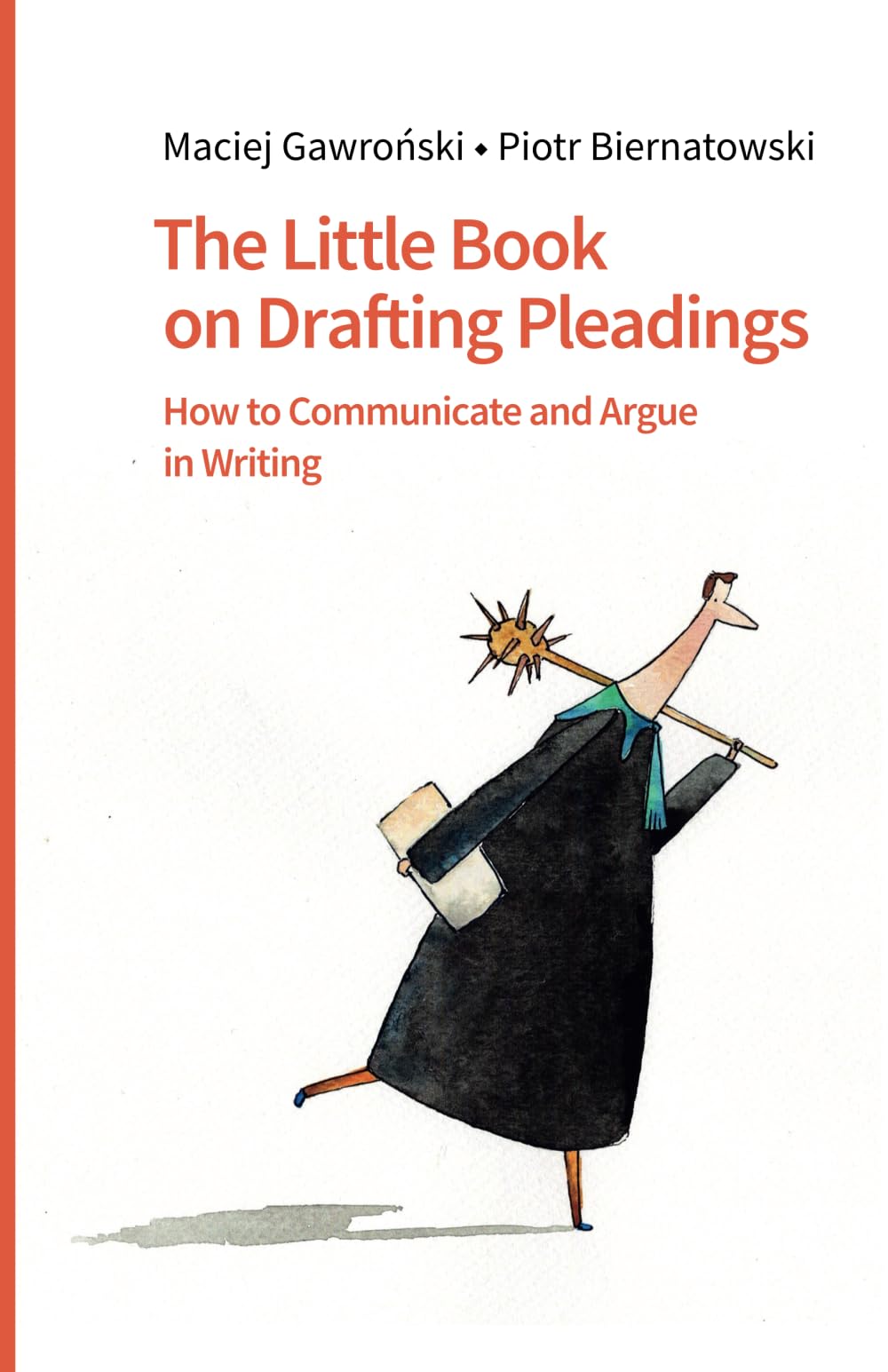
"The Little Book on Writing Pleadings" is a refreshing concise guide on effective legal communication. First published in Poland in 2022, it swiftly topped bestseller lists, thanks to its universally applicable advice and engaging, light-hearted style, enriched by witty illustrations.The book's first section, "Writing Strategy," offers strategic guidance on planning and controlling dispute communication. "Writing Tactics," the second part, dispenses practical advice on text organization to boost readability and persuasive impact. Lastly, "Strategy and Dispute Management" ventures beyond writing to address organizational, psychological, and financial considerations.One of the book's key advantages is its brevity. It provides an enjoyable and quick read that can be easily finished in an evening". Both novice and seasoned lawyers will find the book insightful, providing a chance to align or contrast their own experiences with the authors'. Beyond legal professionals, anyone wishing to enhance their persuasive writing skills will benefit from this book, making its advice universal. Table of Contents PREFACE TO THE ENGLISH EDITION INTRODUCTION Part I WRITING STRATEGY 1. Function and Purpose 2. Who is the Recipient 3. To whom should we address our letter? 4. Winning Hearts and Minds 5. Story, or Narrative, or Capturing Attention 6. The Essence of The Matter – Baseline 7. Balancing Legal Formality and Human Connection 8. The Word Became Flesh – Importance of Terminology 9. Social Aspect 10. Handle Obvious Weaknesses; Do Not Be Silent 11. Evidence Preservation vs. Data Retention 12. Importance of Legal Syllogisms in Reasoning and Victory in Court 13. Demonstrate Your Point, or Rebut Your Opponent's Arguments? 14. How to Avoid Unknowingly Giving Credence to Your Opponent's Claims 15. When Your Opponent's Writing Makes No Sense: Dealing with Gibberish Arguments 16. Short vs. Long Communication 17. Principle of Three Arguments 18. Role Breakdown 19. Recapitulation in the next letter 20. The Principle of Attention at the Beginning and the End 21. Balancing Substance and Procedure Part II WRITING TECHNIQUE 1. Written Communication 2. How to Achieve Brevity and Readability 3. Suspense Inverted 4. Transforming Bottom-Up into Top-Down 5. The Principle of the Drop-Down Menu 6. Catch the First Thoughts 7. Typos 8. Graphs and drawings 9. Brevity 10. Two-clause Complex Sentences 11. Active Voice 12. Avoid Using References 13. Pronouns are Bad 14. Sentence Formation 15. Reading After Printing 16. Horizontal Before Vertical Coverage 17. Don't Leave Seats Vacant 18. Define – How and When 19. Indexing 20. Ornamentation Remove 21. Keep Paragraphs Short and Concise 22. Multiplatform: Paper, Laptop, Smartphone 23. Text Structure 24. Layout of Text on the Page 25. Bold and Underline Overload 26. The Art of Quotation 27. How to Create Legal Norms 28. Google it up! 29. Imagine 30. Two-Clause Complex Sentences II 31. Recapitulation vs. Backfilling 32. Using Track Changes 33. Open in a New Window 34. How to Handle Repetition 35. Teamwork on Time 36. Contrary to all Above Part III STRATEGY AND CONDUCT OF THE DISPUTE 1. Where we are, where we are going, and how we will get there, i.e. diagnostics of the matter 2. Where are We? 3. Where Do We Go From Here? 4. Preparing for a Dispute 5. Dispute Strategy 6. Get to Know Your Opponent 7. Disputes vs. Board Liability 8. Substantive Legal Actions 9. Initiation of Proceedings 10. Litigation Tactics 11. Organizing Proceedings 12. Communicating with the Opponent 13. Evidence Motions – Polish Formalism 14. Private Expert 15. Experts 16. Court Hearing 17. Wake-up Call 18. Behavioral Analysis of the Judge 19. When the Judge Doesn't Keep Up 20, 21, 23, 24
More Information
| Gtin | 09788396889300 |
| Age_group | ADULT |
| Condition | NEW |
| Gender | UNISEX |
| Product_category | Gl_book |
| Google_product_category | Media > Books |
| Product_type | Books > Subjects > Self-Help > Communication & Social Skills |