
Description
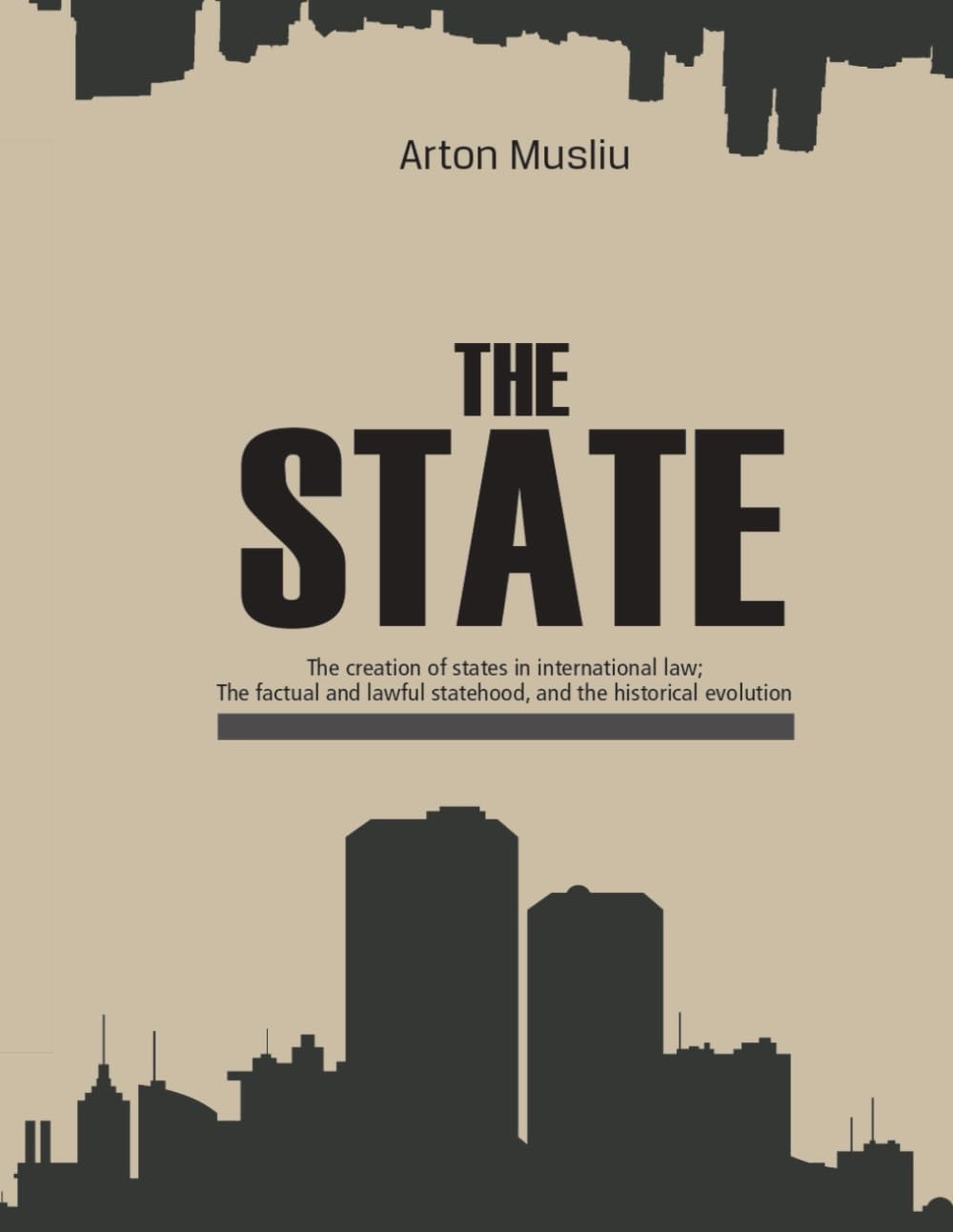
The state is the name for which people always die with will and desire; it is the place for which we always feel love; and it is the land to which we are forever bond. The book you have in your hand is one of the rare books in English that speaks of the state as a supreme category and triumphant legal-political organization in the world, as well as a philosophical and sociological construction. This book introduces in a chronological, creative, innovative, objective, and argumentative way the history of the formation of pre-state rudiments; the creation of the modern state as we know it today; the criteria that an entity must meet to become a state; the evolution of these criteria as well as the impact of the concept and principle of sovereignty and territorial integrity; recognition; international stability and balance of power; the impact of decolonization and exclusive self-determination; liberal self-determination; secession; Jus Cogens and Erga Omnes norms of international law; the theory of realism, the legal doctrine and legal practice of the International Court of Justice in the formation of states, namely, the failure of their formation. This study also challenges the traditional concept of state formation. In this regard, the formation of states is not done through force, i.e., the sovereignty that peoples and entities exercise, but through letters, namely the recognition and self-determination that they receive. In this contextual divergence, formal statehood stands above factual statehood. Thus, the conventional concept of the state is relativized. It is actually complemented. Therefore, even for a relatively long time, states will be formed by "letters" and not by "force"; they will be formed through the law; through recognition; through self-determination. The legal basis for the formation of these states will continue to be secession, namely the doctrine of qualified secession. There are so many minority peoples and national minorities (when it comes to national minorities within existing states, secession efforts by these states will be inevitable and unstoppable). As they have done in the past, so they are doing now, and they will continue the same way in the future, people will fight for their sublime goals—for the formation of their respective states as well as national unity. Humanity has never reconciled itself to limitations. The unavoidable consequence of limiting people's aspirations and aims to forming their own states will undoubtedly be a death explosion. In this legal and political mess, the formation of states is the most difficult goal to achieve, while the demands of various territorial entities around the world, predominantly, have ethno-nationalist motives. The author, among other things, expresses the view that the formation, respectively the failure of the formation of states, depends on the following elements: The concept of the balance of power, Sovereignty and territorial integrity, Recognitions, Self-determination in its external manifestation, Realism as a central and basic theory of the functioning of states, International stability, and Jus cogens norms of international law. Although nationalism is a political and sociological construction, wars everywhere will still be motivated by ethno-nationalist basis. The number of people living in "foreign" states is still very large. Meanwhile, many people still live separately in different states, and hopefully, one day they will unite in a single state because the current international order represents a system in which states are formed on a territorial, non-ethnic basis. Finally, the state will continue to remain the central subject in international law and relations. Their number will undoubtedly increase, though not in the desired and claimed dynamics. The formation of new states is an unstoppable process, regardless of the time context, political circumstances, and the nature of the international order.
More Information
| Gtin | 09798334155565 |
| Age_group | ADULT |
| Condition | NEW |
| Gender | UNISEX |
| Product_category | Gl_book |
| Google_product_category | Media > Books |
| Product_type | Books > Subjects > Politics & Social Sciences > Politics & Government > International & World Politics > European |