
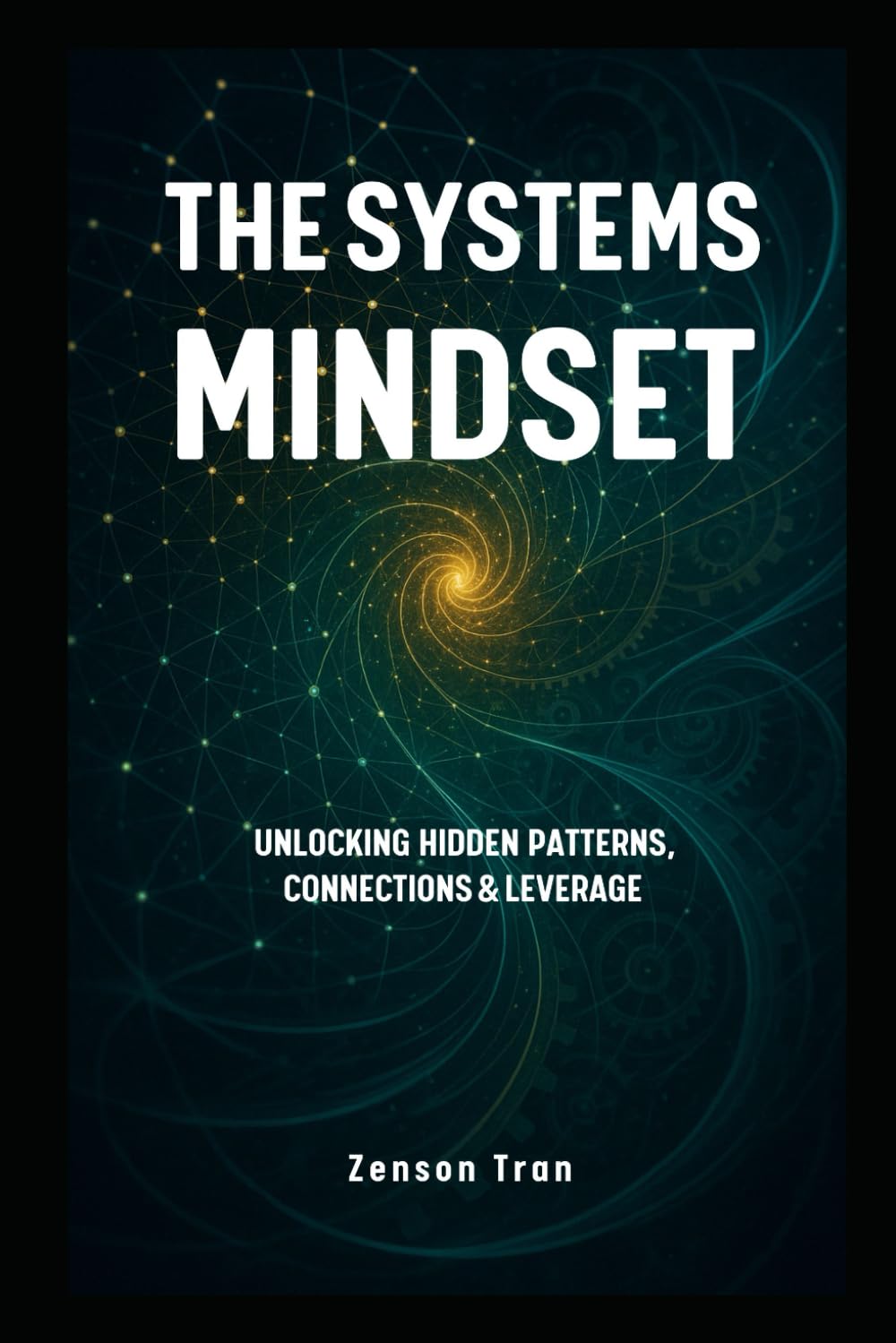
Description
Constantly rushing to solve one urgent crisis after another, only to see the same problems crop up again later? Until recently, that’s exactly where I found myself. Then, I encountered a book that not only shifted my perspective but also transformed my understanding of how organizations truly function: The Systems Mindset: Unlocking Hidden Patterns, Connections & Leverage. Reading this book felt like finding a hidden doorway into an entirely new way of seeing my workplace, my teams, and myself. Instead of viewing my company as a complicated machine with faulty parts, I started seeing it as a dynamic ecosystem filled with interconnected relationships and hidden feedback loops. Seeing the Bigger Picture: My Key Insights One of the most powerful lessons I took away from this book is the idea that most organizational issues aren’t isolated—they’re symptoms of deeper systemic causes. I learned about the “Iceberg Model,” which vividly illustrates that what we see on the surface (the day-to-day issues) is just the tip. Beneath lie deeper patterns, structures, and mental models driving those recurring challenges. Before, I constantly wondered why our improvement initiatives seemed so short-lived. The book taught me why: we’d been treating symptoms, not root causes. Our quick fixes—whether adding more staff or investing in new tools—would temporarily relieve pressure but inevitably created unintended consequences elsewhere. This realization was like finally understanding why all those previous solutions had fallen flat. Learning to Identify the Leverage Points Perhaps the most empowering part of the book was discovering how to spot “leverage points”—those small, often subtle shifts that create outsized impacts. Instead of trying to change everything all at once, this concept taught me to ask: “What’s the smallest change we can make for the biggest overall improvement?” Armed with this insight, I recently facilitated a session at my workplace to map our own system dynamics using causal loop diagrams (CLDs). By visualizing how different departments and processes interact, we pinpointed exactly where small changes could yield dramatic results. For example, we adjusted a simple incentive structure, shifting the focus slightly from speed to quality—and suddenly, our recurring issues began to diminish. It was a breathtaking moment of clarity. A New Approach to Leadership One of the most transformative sections for me personally was the discussion on systemic leadership roles: Designer, Steward, and Teacher. I realized that my leadership style had been too heavily focused on control. The book invited me to rethink this. Instead of controlling every decision, I began designing conditions for others to succeed, clearly defining purpose and boundaries, and teaching my team systemic thinking principles. It felt less like losing power and more like discovering a deeper, more meaningful way of guiding people—empowering them rather than constraining them. Embedding Culture: Making Change Stick A key practical takeaway for me was how explicitly and intentionally cultural change must be managed. Until now, I had underestimated the power of resistance and how deeply old habits are ingrained. The book clearly explained that resistance isn’t something to fight against—it’s a natural human reaction that we must acknowledge, discuss openly, and handle with care. We began integrating these principles into our regular practices—holding team retrospectives to explicitly discuss what was working and what wasn’t, and providing targeted training to build skills in systemic thinking, collaboration, and adaptability. Gradually, these practices started embedding themselves into our daily interactions, transforming our culture from within.
More Information
| Gtin | 09798294660369 |
| Age_group | ADULT |
| Condition | NEW |
| Gender | UNISEX |
| Product_category | Gl_book |
| Google_product_category | Media > Books |
| Product_type | Books > Subjects > Business & Money > Management & Leadership > Leadership & Motivation |