
Description
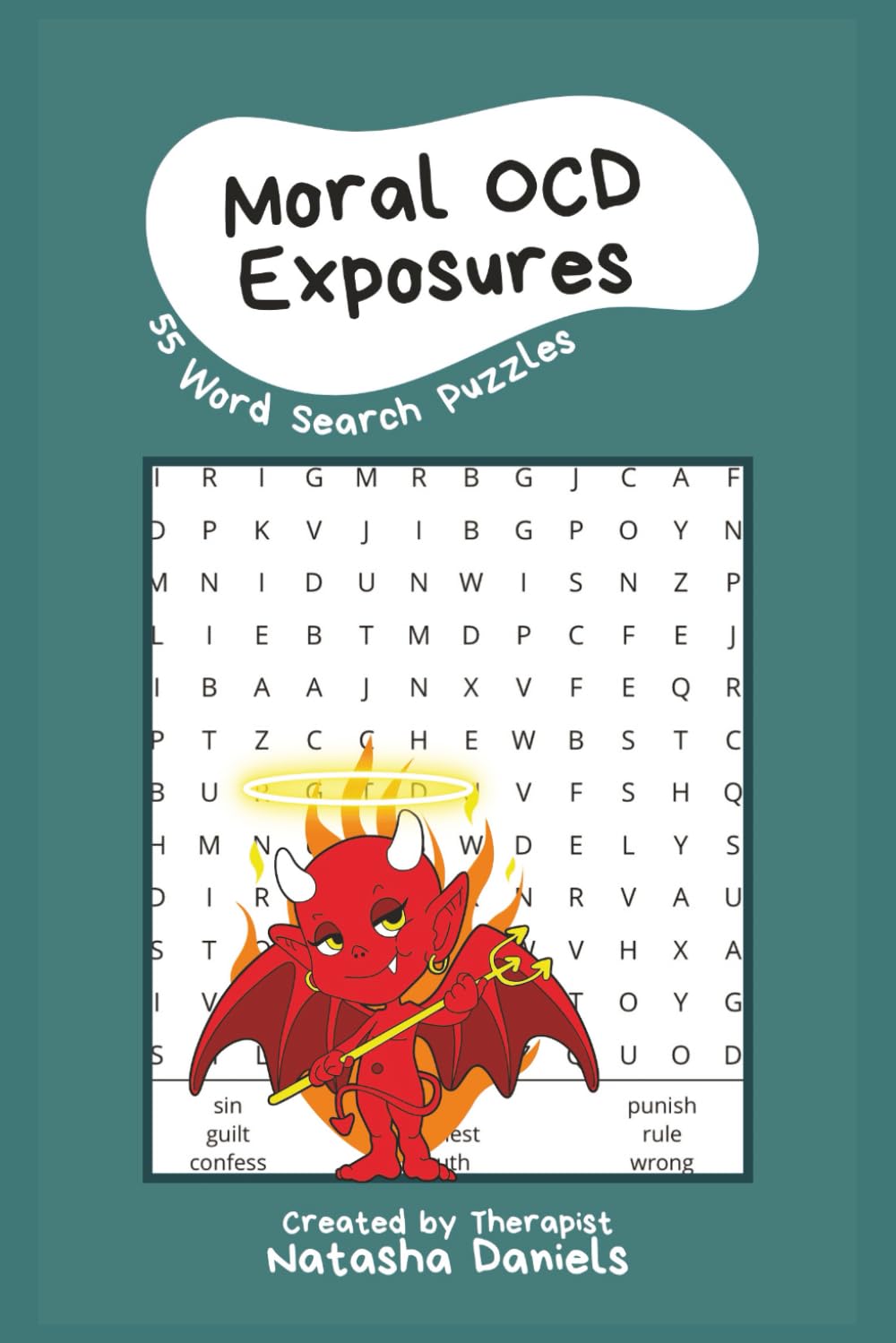
Are you, your child, or your therapy client struggling with Moral OCD (Scrupulosity) — the fear of doing something “wrong,” “immoral,” or “bad”? Finding supportive, creative tools can make all the difference in the journey toward overcoming moral OCD and supporting lasting recovery. This unique puzzle workbook, created by OCD therapist Natasha Daniels, blends exposure therapy principles with uplifting word search activities, providing a safe and approachable way to face moral OCD triggers step by step. By including key scrupulosity trigger words in every puzzle, readers are gently guided into repeated exposure while staying engaged through the challenge of a word search. Ideal for use at home or in therapy sessions, this workbook is designed for individuals, parents, caregivers, and therapists who want to make exposures less intimidating and more accessible. Whether you’re supporting a child, teen, or adult, these puzzles offer a structured yet flexible way to practice facing fears. This word search puzzle book features: ✅ 55 therapeutic word search puzzles intentionally created with moral OCD exposures in mind ✅ Easy-to-read words suitable for children, teens, and adults ✅ Encouraging phrases on each page to boost confidence and motivation ✅ Key scrupulosity trigger words in every puzzle for gradual exposure ✅ Solutions included in the back of the book for easy reference This workbook is a helpful tool for anyone seeking moral OCD help, as well as for therapists looking to integrate creative exposures into treatment. It can complement CBT, ERP, or other evidence-based approaches by offering an engaging activity that reinforces therapeutic goals. Take the first step today toward freedom from moral OCD — and discover that you (or your client) are stronger than you think.
More Information
| Gtin | 09798267896740 |
| Age_group | ADULT |
| Condition | NEW |
| Gender | UNISEX |
| Product_category | Gl_book |
| Google_product_category | Media > Books |
| Product_type | Books > Subjects > Health, Fitness & Dieting > Mental Health > Compulsive Behavior |