
Description
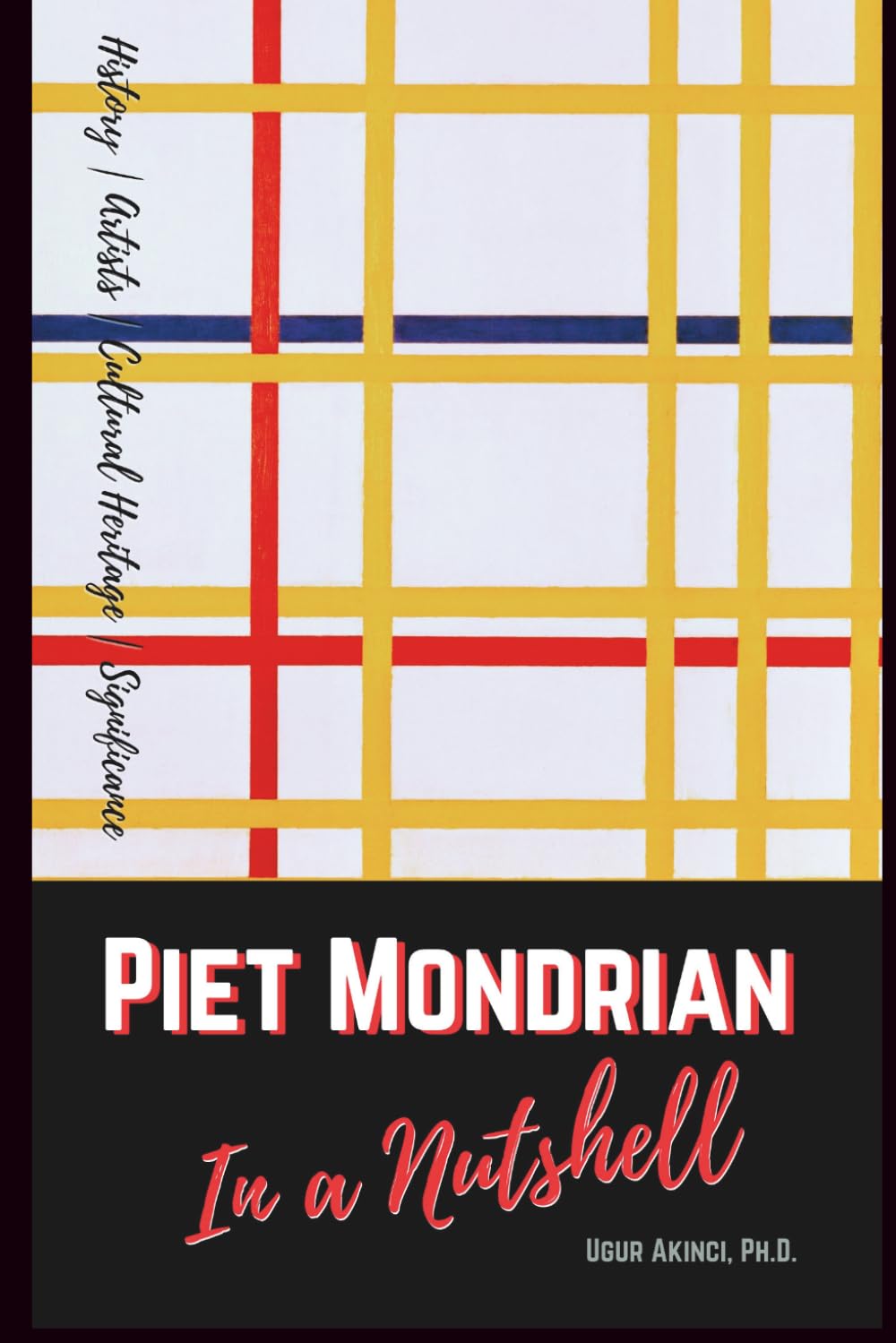
What if a handful of lines and colors could reshape the way we see the world? This book takes you inside the disciplined, radical, and quietly revolutionary journey of Piet Mondrian—an artist who transformed painting from representation into a universal language of structure, balance, and clarity. Moving from Dutch Realism to pure abstraction, Mondrian did not simply change styles—he redefined what art could be . From early landscapes rooted in observation to the precise grids of Neo-Plasticism, this book traces a deliberate evolution driven by one question: Can art express universal harmony without depicting reality? You will discover how Mondrian: Progressed from naturalistic painting to a system based on geometry, proportion, and relational balance - Helped found De Stijl , a movement that reimagined art as a blueprint for society, design, and architecture - Developed a visual language using only horizontal and vertical lines, primary colors, and neutrals - Transformed composition into a structured system of forces rather than images - Responded to Parisian Cubism, wartime isolation, and New York’s urban rhythm with increasingly refined abstraction A Story of Precision, Not Simplicity Mondrian’s work may appear minimal—but behind every line lies relentless refinement . He adjusted compositions millimeter by millimeter, layering paint, revising edges, and calibrating proportions until balance was achieved. His paintings are not spontaneous—they are constructed with the rigor of architecture and the logic of systems design . Inside, you’ll explore: The hidden structure behind works like The Gray Tree , Pier and Ocean , and Broadway Boogie Woogie - How rhythm, spacing, and asymmetry create movement within static compositions - The surprising role of jazz, urban planning, and studio experimentation in shaping his late work - Why white space is never empty—and how color functions as a force, not decoration Beyond Painting: A System That Changed Everything Mondrian’s influence extends far beyond the canvas. His ideas reshaped: Architecture — open-plan spaces, modular design, and spatial rhythm - Graphic Design — grid systems, layout logic, and visual hierarchy - Fashion & Interiors — geometric clarity and timeless minimalism - Modern Systems Thinking — structure, scalability, and relational design His work laid the foundation for how we organize visual information today —from magazines to digital interfaces. Controversy, Legacy, and the Problem of Authenticity As Mondrian’s reputation grew, so did the complexity surrounding his work: Postwar provenance investigations and restitution cases reshaped museum practices - His deceptively simple style made him a target for art forgeries , requiring advanced scientific authentication - Debates over abstraction challenged critics, collectors, and audiences alike This book examines not only the art—but also the ethical, historical, and market forces that continue to shape his legacy. Why Mondrian Still Matters Roughly 80% of Mondrian’s mature works use only black, white, and primary colors —a striking testament to his belief that simplicity can produce profound complexity. His art is not about reduction for its own sake, but about discovering order within chaos . Today, his influence lives on in every grid, every structured layout, every system built on clarity and balance.
More Information
| Gtin | 09798255230952 |
| Age_group | ADULT |
| Condition | NEW |
| Gender | UNISEX |
| Product_category | Gl_book |
| Google_product_category | Media > Books |
| Product_type | Books > Subjects > Biographies & Memoirs > Arts & Literature > Artists, Architects & Photographers |