
Description
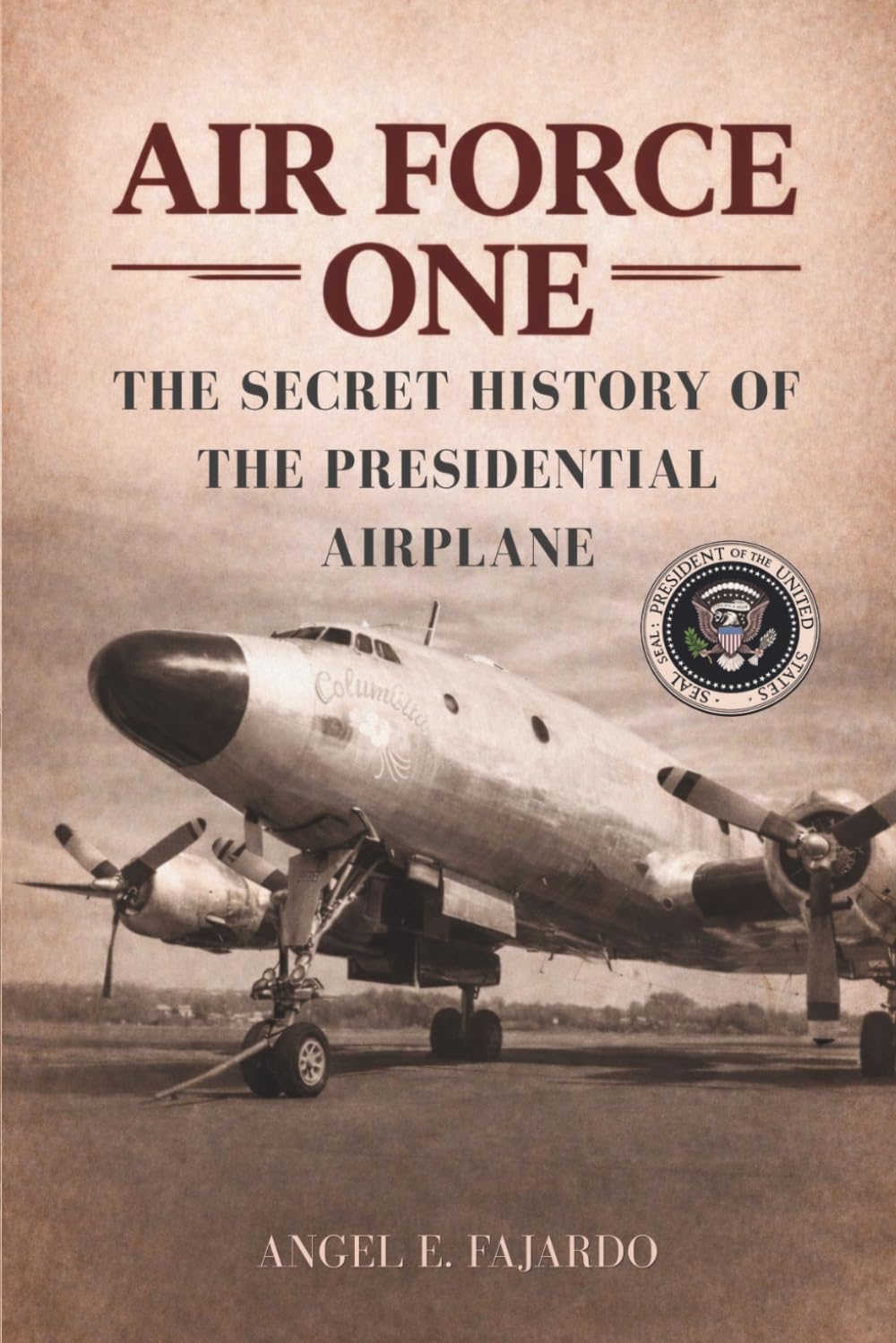
Every president since Franklin Roosevelt has governed from the sky. The aircraft that carries the American executive through the world’s airspace is not merely a transport; it is a flying command post, a diplomatic theater, a classified military platform, and the most immediately recognizable symbol of American executive authority in the world. It has borne the weight of the most consequential moments of the modern presidency: the oath administered in a Dallas cabin on the afternoon of November 22, 1963; the wandering flight path of September 11, 2001; the overnight crossing to Beijing in 1972; the resignation flight to California on August 9, 1974. It has carried the Cuba opening, the Moscow summits, the Reykjavik near-breakthrough, and the Hiroshima descent. It has been present at every significant departure and every consequential arrival of the aerial presidency’s eight decades of service, performing its mission with the professional reliability of an institution that was created in wartime improvisation and developed, aircraft by aircraft and administration by administration, into the most sophisticated single aviation platform in the American military’s operational inventory. AIR FORCE ONE is the complete history of that institution, from the modified Boeing flying boat that carried Franklin Roosevelt across the South Atlantic in January 1943 to the classified Boeing 747 variants whose blue and aluminum the world has recognized since the Kennedy commission gave them the specific visual character that sixty years of continued service have confirmed as the most durable single design achievement in the visual vocabulary of American public life. It is a history of the aircraft as a physical object, a classified military platform, a diplomatic instrument, and a cultural symbol simultaneously, because that is what it is. It examines the specific moments whose institutional weight the aircraft has been required to carry, the classified systems whose existence the security architecture has managed within the gap between public accountability and operational security, the design decisions whose consequences have outlasted the administrations that made them, and the specific human beings, the presidents, the pilots, the communications operators, the Secret Service agents, and the maintenance personnel of the 89th Airlift Wing, whose institutional lives have been organized around the mission of carrying the American executive authority through the world’s airspace with the professional competence that the mission has always demanded. This is not a book about aviation. It is a book about power: about who holds it, how it moves, what it costs, and what it conceals. It is a book about what the most visible single instrument of American executive authority in the world reveals about the nature of that authority when examined honestly, without the hagiographic inflation that the aircraft’s institutional prestige invites and without the cynical deflation that the failures of the authority it has carried can tempt the historical account to impose. What it reveals is an institution of genuine and remarkable achievement, operating in the tension between democratic transparency and operational secrecy that has always defined its relationship with the republic it serves, an institution that has carried the American presidency through the most consequential eight decades in the history of democratic governance, and that will continue carrying it, in the form of the new aircraft whose development the demands of the twenty-first century have required, toward whatever the sky ahead holds for the office and the nation that the aircraft represents.
More Information
| Gtin | 09798257570858 |
| Age_group | ADULT |
| Condition | NEW |
| Gender | UNISEX |
| Product_category | Gl_book |
| Google_product_category | Media > Books |
| Product_type | Books > Subjects > History > Military > Aviation |