
Description
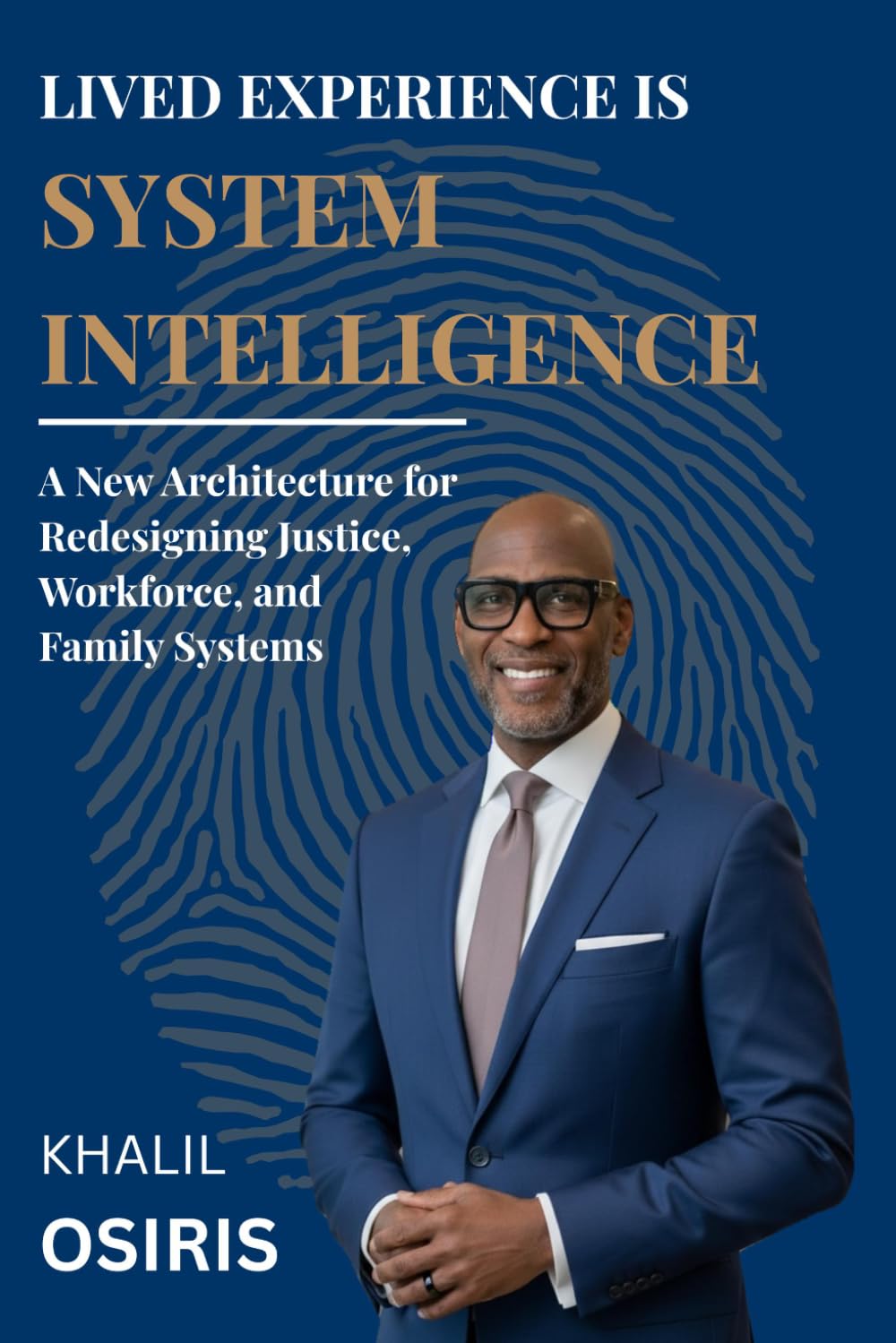
A standing ovation is not systems redesign. Every workforce development program, criminal justice reform initiative, and family stability nonprofit makes the same decision: the people who know the system best get the opening stage, and the people who have never survived it get the room where decisions are made. In Lived Experience Is System Intelligence , Khalil Osiris names this pattern the inspiration-extraction economy : the arrangement by which institutions use the stories of justice-impacted people for legitimacy while declining to share design authority. Then he dismantles it. Drawing on lived and professional experience on both sides of the American carceral and reinvention systems, Osiris introduces LESI: Lived Experience Is System Intelligence , a distinct category of knowledge that produces what no credentialed study can: a diagnosis of exactly where systems break, why they break predictably, and what a durable architecture looks like instead. What this book delivers: LESI : a formal architecture naming the intelligence justice-impacted people produce about the systems that have processed them, and a diagnostic protocol for recognizing it - The Durability Index : a five-domain household stability scorecard tracking Employment Retention, Housing Stability, Financial Resilience, Family Connection, and Justice-System Stability, replacing legacy 90-day placement and recidivism metrics - The 2Gen Economy Council : a governance model where lived-experience holders sit with binding design authority, not consultation status - The 90-Day Challenge : a phased implementation path (Audit → Design → Launch) any workforce board, employer, or philanthropy can begin next quarter - Employer performance data : the ROI math showing why fair-chance hiring designed around household stability outperforms conventional hiring in every P&L metric Who this book is for: HR leaders and CHROs designing fair-chance hiring programs that outlast the press release - Workforce board directors and program officers ready to measure household stability instead of placement counts - Foundation program officers and funders ready to fund architecture, not inspiration - Policymakers and legislative counsel writing reentry, workforce, and criminal justice reform statutes - Corrections and reentry practitioners looking for the measurement architecture that actually predicts durability - Academic researchers studying standpoint epistemology, participatory action research, and knowledge production - Justice-impacted professionals building the systems they once survived This is not a memoir. It is not motivational literature. It is an architecture manual : a scorecard, a governance model, a diagnostic protocol, and a 90-day implementation path, built for institutions ready to stop extracting the intelligence of justice-impacted people and start being redesigned by it. If you want better outcomes, stop asking the people closest to failure to tell the story. Start letting them redesign the system. Change the metrics. Change the outcomes.
More Information
| Gtin | 09798992757675 |
| Age_group | ADULT |
| Condition | NEW |
| Gender | UNISEX |
| Product_category | Gl_book |
| Google_product_category | Media > Books |
| Product_type | Books > Subjects > Politics & Social Sciences > Politics & Government > Public Affairs & Policy > Social Policy |