
Description
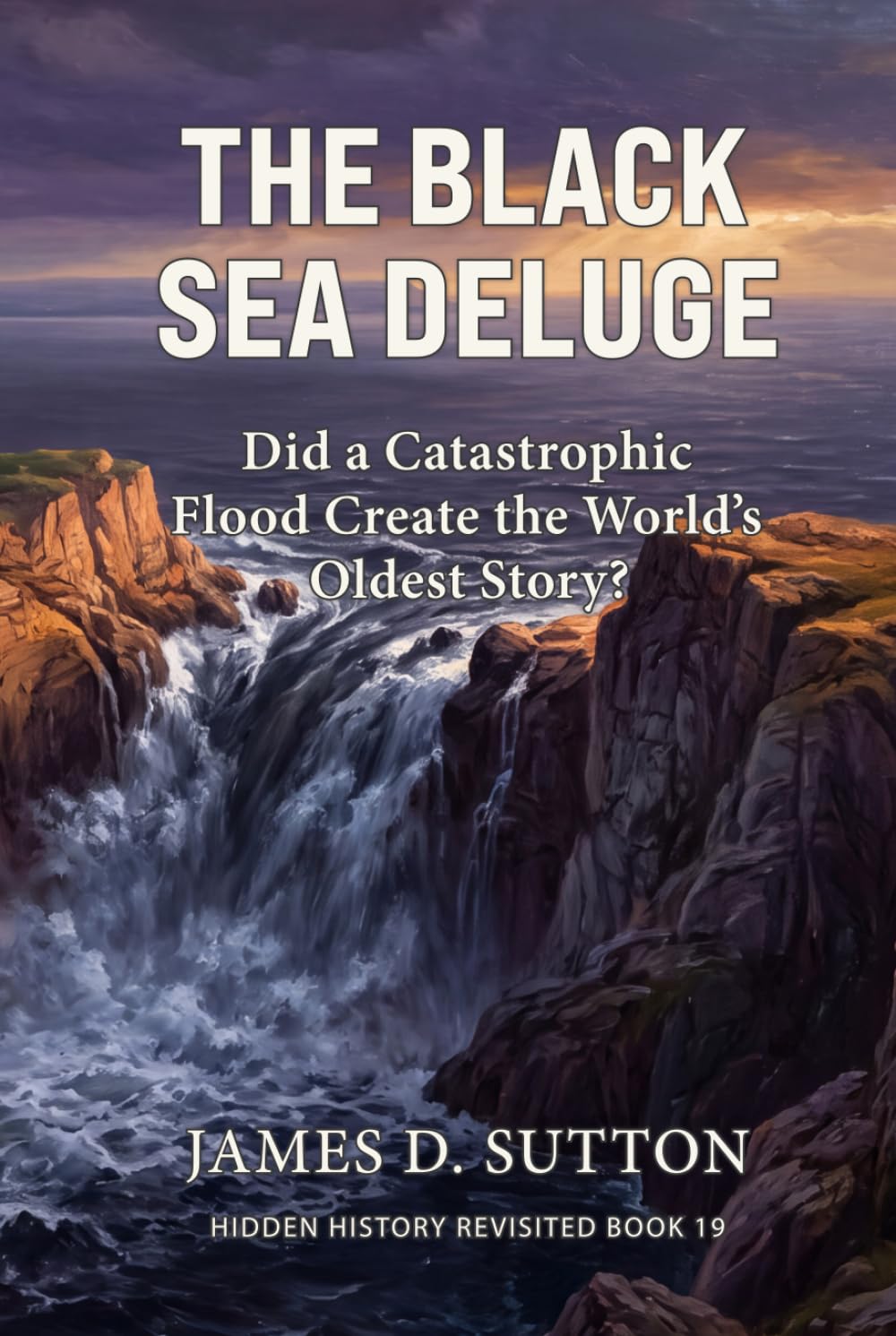
Seven thousand years ago, the Mediterranean broke through the Bosporus Strait and flooded the Black Sea basin. Or it didn’t. In 1996, two marine geologists at Columbia University’s Lamont-Doherty Earth Observatory proposed that the reconnection was catastrophic—a wall of saltwater pouring through a narrow channel at two hundred times the flow of Niagara Falls, drowning a hundred thousand square kilometers of inhabited coastline in less than a generation. William Ryan and Walter Pitman argued that this event, seared into the cultural memory of survivors who scattered across the Near East, became the story of Noah’s Flood. The geological evidence is real. Sediment cores document a freshwater-to-saltwater transition across the basin. Robert Ballard found a submerged paleoshoreline at 155 meters depth off the Turkish coast with radiocarbon-dated freshwater shells. Strontium isotopes track the shift from river chemistry to Mediterranean seawater. In 2017, Yanchilina and colleagues concluded the flooding took less than forty years. But the counter-evidence is equally real. Valentina Yanko-Hombach’s foraminiferal analysis from shelf cores suggests the pre-flood lake stood only 20 to 30 meters below the sill—not the 80 meters Ryan’s scenario requires. Mark Siddall’s hydrodynamic models show the Bosporus would have throttled the inflow. Ali Aksu and Richard Hiscott found evidence the Black Sea was already draining outward during the early Holocene. The Springer counter-volume runs 975 pages. Neither side has landed a decisive blow. The Black Sea Deluge is the comprehensive assessment—the investigation that neither Ryan and Pitman’s proponents nor Yanko-Hombach’s gradualists have written. Every sediment core. Every expedition. Every counter-argument at full strength. The ancient traditions—Sumerian, Babylonian, biblical, Greek—traced from clay tablet to geological event. The question of whether oral memory can bridge three thousand years. The five open questions that would settle the debate, and the evidence that probably cannot be recovered. The catastrophic flood was proposed by mainstream scientists, debated in mainstream journals, and supported by at least some strands of the physical evidence. Whether it created the story of Ziusudra, Atrahasis, Utnapishtim, and Noah is a question the Black Sea has not yet answered. ---------- This is a work of narrative nonfiction, written to be read, not looked at. There are no photographs or illustrations. The lines are drawn in prose. Every factual claim sourced to peer-reviewed publications and the verified research record. Every scientific position presented with both sides at full strength. Where the hypothesis is strong, the book says so. Where it has genuine problems, the book says that too. The evidence is the story. The reader assesses. ---------- Hidden History Revisited is an investigative nonfiction series examining the sites, artifacts, and hypotheses that challenge the orthodox archaeological and geological narrative. Each book investigates a single subject from a position of sympathetic curiosity—taking the questions seriously, demanding evidence, and scoring the claims honestly. Book 1: The Case for a Lost Civilization. Book 2: Fingerprints Revisited. Book 15: The Drowned World. Book 31: The Global Flood. Each book stands alone. Each follows the evidence wherever it leads.
More Information
| Gtin | 09798185159002 |
| Age_group | ADULT |
| Condition | NEW |
| Gender | UNISEX |
| Product_category | Gl_book |
| Google_product_category | Media > Books |
| Product_type | Books > Subjects > History > Ancient Civilizations > Prehistory |