
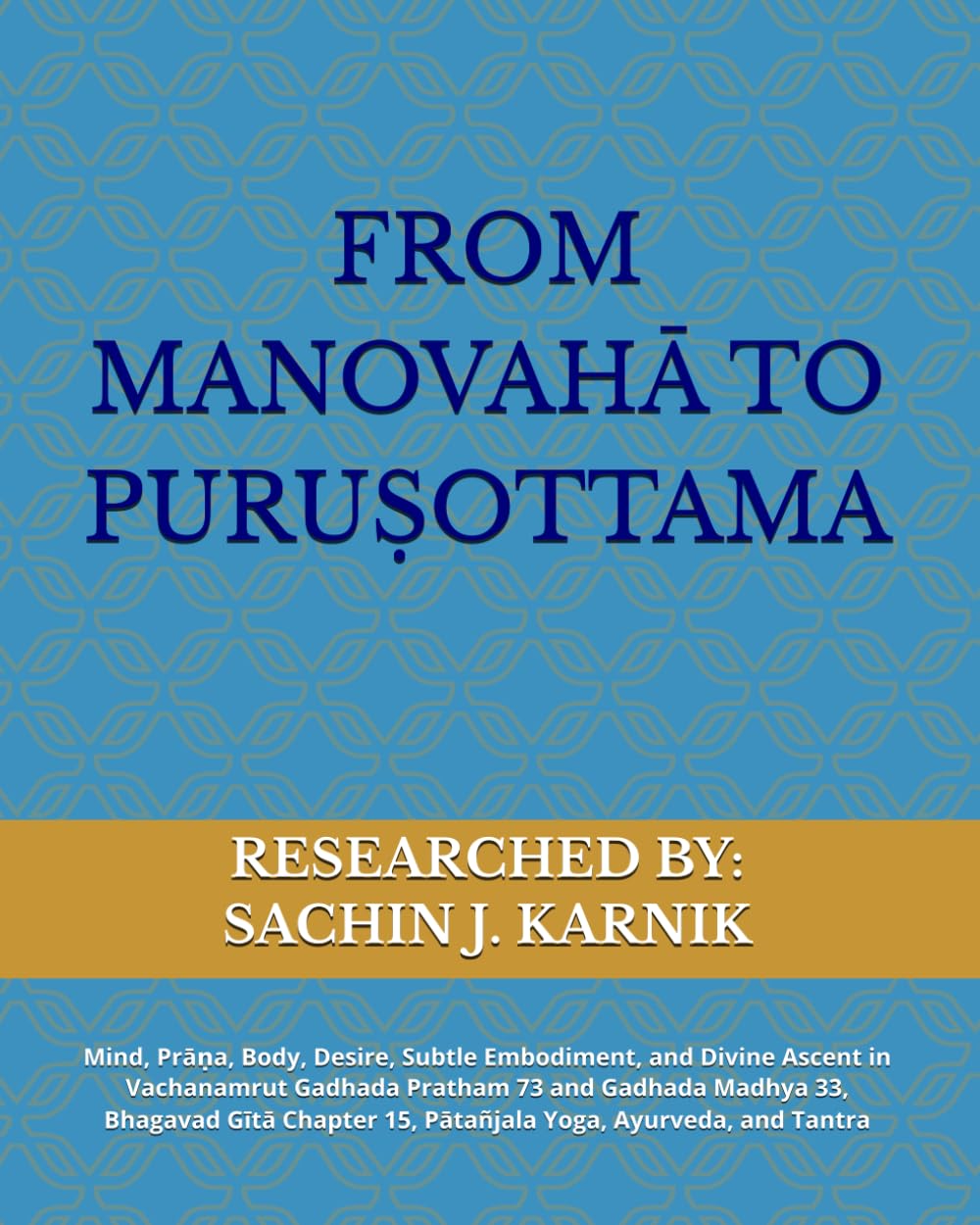
FROM MANOVAHĀ TO PURUṢOTTAMA: Mind, Prāṇa, Body, Desire, Subtle Embodiment, and Divine Ascent in Vachanamrut Gadhada Pratham 73 and Gadhada Madhya 33,($244.12Value)
$244.12
FROM MANOVAHĀ TO PURUṢOTTAMA: Mind, Prāṇa, Body, Desire, Subtle Embodiment, and Divine Ascent in Vachanamrut Gadhada Pratham 73 and Gadhada Madhya 33,($244.12Value)
Description
*From Manovahā to Puruṣottama* is a comparative study of mind, desire, embodiment, discipline, and liberation across the Vachanamrut, Bhagavad Gītā, Pātañjala Yoga, Ayurveda, Tantra, and Haṭhayoga. Its central concept is Manovahā Nāḍī, understood not as a literal modern nerve but as a classical psychophysiological channel or network through which mental activity, intention, desire, and bodily response are related. Drawing on the Mahābhārata and Carakasaṃhitā, the book traces Manovahā from heart-centered channel imagery to a broader Ayurvedic model of mind-body interaction, while rejecting identifications with the vagus nerve, spinal cord, nervous system, or Suṣumṇā. The primary Swaminarayan axis is formed by Vachanamrut Gadhada Pratham 73 and Gadhada Madhya 33. G.P. 73 analyzes how saṅkalpa—desire-bearing mental formation—can become psychophysically consequential. It connects mind, kāma, vīrya, subtle embodiment, waking and dream states, brahmacharya, vāsanā, vairāgya, ātma-niṣṭhā, nirdoṣa-buddhi, samādhi, and finally mano’rpaṇa, the offering of the mind to Bhagavan. The discourse argues that physical restraint alone cannot conquer desire; lasting freedom requires vairāgya, freedom from latent attraction, firm upāsanā, and divine grace. G.M. 33 complements this inward analysis with a practical regulatory model based on mind, prāṇa, and body. Mental discipline is sustained through ātma-reflection and devotion; prāṇa is steadied through moderation of food and taste; and the body is governed through niyama and repeated abhyāsa. Together the two Vachanamruts present both the depth-psychology of desire and the behavioral ecology needed to stabilize niṣkāmī living. Bhagavad Gītā Chapter 15 supplies the larger theological map. The inverted aśvattha tree represents conditioned existence; asaṅga cuts attachment; the jīva carries mind and senses through embodiment; the Lord dwells in the heart as the source of memory and knowledge; and the chapter culminates in Puruṣottama, beyond kṣara and akṣara, as the supreme object of knowledge and devotion. Pātañjali contributes citta-vṛtti-nirodha, abhyāsa, vairāgya, kleśa analysis, pratyāhāra, brahmacharya, meditation, and samādhi, while Tantra and Haṭhayoga contribute models of prāṇa, nāḍī, bindu, retas, cakra, and ascent. The book’s governing synthesis is a movement from viṣayābhimukhī adhogati, the descent of attention into sensory appropriation, memory, saṅkalpa, kāma, and bondage, toward bhagavadabhimukhī ūrdhvagati, the ascent through discernment, ātma-niṣṭhā, jñāna-yukta vairāgya, disciplined practice, upāsanā, mano’rpaṇa, and Puruṣottama-niṣṭhā. Its mature ideal is neither indulgence nor repression, but integrated transformation in which attention, appetite, conduct, identity, devotion, and grace are brought into one spiritual direction. Throughout, the work distinguishes primary text, commentary, comparison, theological synthesis, and modern analogy, making it devotional yet methodologically cautious.
More Information
| Gtin | 09798192101896 |
| Age_group | ADULT |
| Condition | NEW |
| Gender | UNISEX |
| Product_category | Gl_book |
| Google_product_category | Media > Books |
| Product_type | Books > Subjects > Religion & Spirituality |